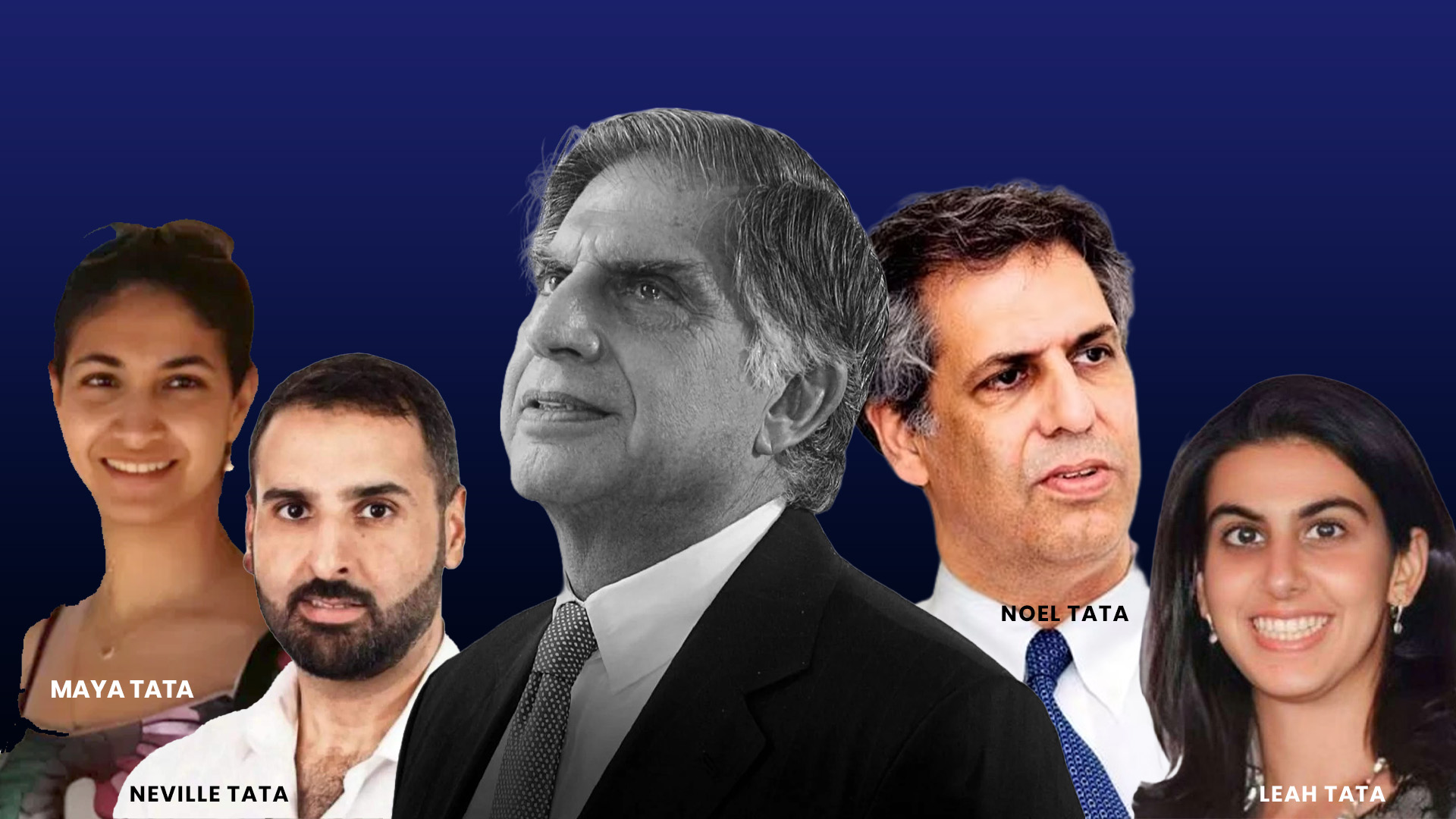
After Ratan Tata’s death, the struggle over ownership, leadership and the future of Tata Sons raises larger questions about India’s corporate institutions, concentration of economic power and the future of employment.
The history of modern Indian industry cannot be written without the Tata Group. From steel and automobiles to aviation, hospitality, chemicals and information technology, the group has participated in the making of India’s industrial economy for more than a century.
The death of Ratan Tata on October 9, 2024, marked the end of an important chapter in that history. But it also exposed a question that large family-founded institutions eventually have to confront: can an organisation preserve its institutional character when the individual who represented its values and authority is no longer there?
The developments at Tata Sons suggest that this question is no longer theoretical.
What is unfolding is a struggle involving ownership, management authority, shareholder interests and regulatory obligations. Its consequences may extend beyond Tata’s boardrooms and into the wider Indian economy.
The economics of ownership
To understand the dispute, one must first understand the ownership structure of Tata Sons, the principal holding company of the group.
Tata Trusts collectively own approximately 66 per cent of Tata Sons. The Shapoorji Pallonji Group holds approximately 18.4 per cent, while Tata companies and other shareholders hold the remaining shares.
This structure gives Tata Trusts considerable influence over the holding company. But ownership and management are not the same thing. The Trusts exercise shareholder rights, while the Tata Sons board and its management are responsible for running the company.
The present disagreement between Noel Tata, chairman of Tata Trusts, and N. Chandrasekaran, chairman of Tata Sons, brings this distinction into focus.
The Tata Sons board approved Chandrasekaran’s second five-year reappointment on September 17, 2026. Noel Tata opposed the decision, raising questions about the process and the balance of authority between the board and the Trusts.
This is fundamentally a question of corporate governance: should the authority of a company’s professional board prevail in operational matters, or should its controlling shareholder exercise greater influence over major strategic decisions?
There is no simple answer. But the stability of an institution depends on clearly defined boundaries between the two.
The Shapoorji Pallonji factor
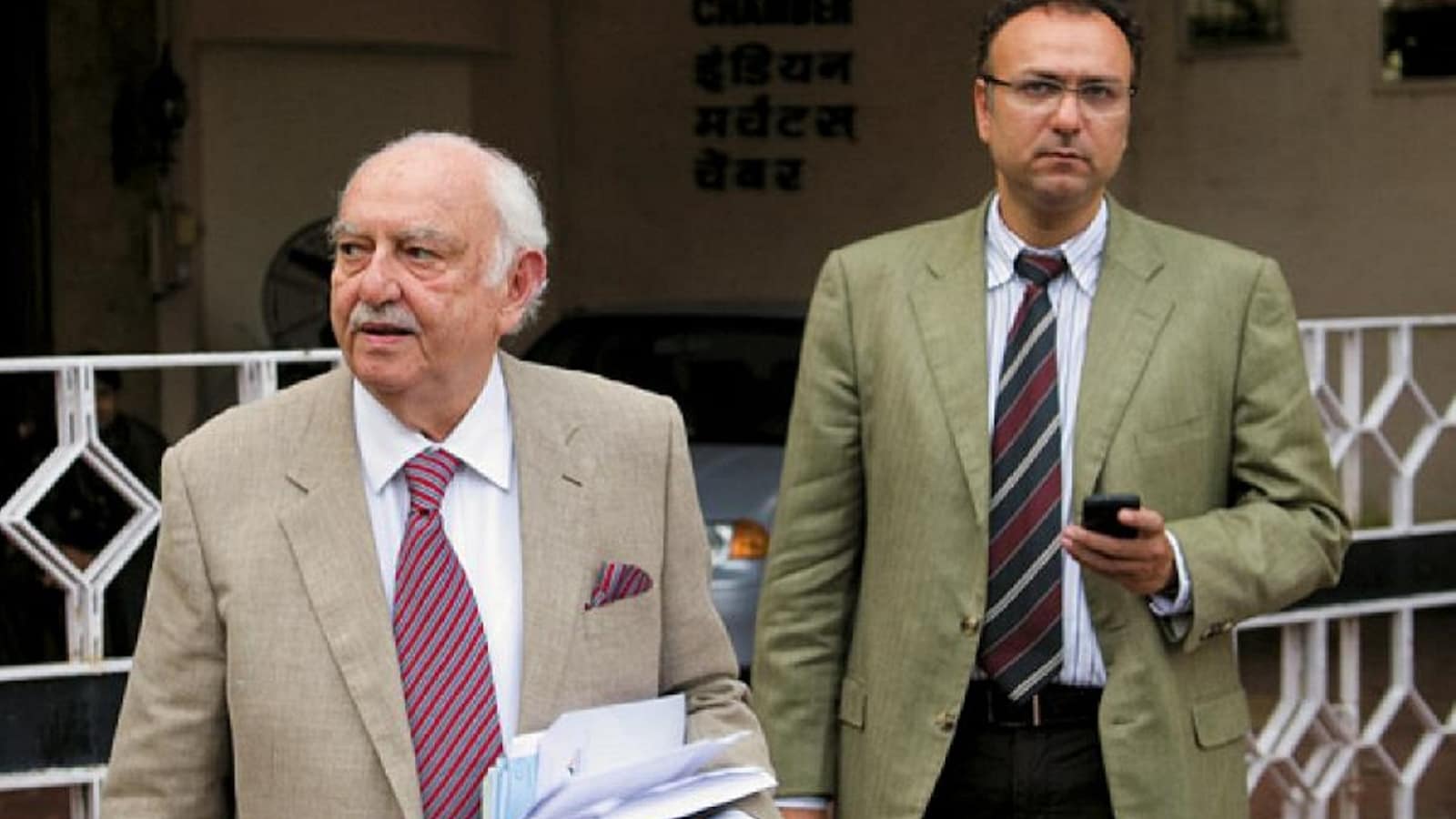 The financial interests of the Shapoorji Pallonji Group add another dimension to the dispute.
With approximately 18.4 per cent ownership, SP Group is the largest non-Tata shareholder in Tata Sons. Its investment is substantial, but it does not provide management control.
The group has been seeking to unlock the value of its investment. Its proposed ₹25,000-crore share buyback has brought the question of ownership restructuring to the centre of the discussion.
The economic logic is understandable. A large investment in an unlisted company can become difficult to monetise, particularly when the shareholder faces substantial debt obligations.
For Tata Sons, however, a buyback is not merely a financial transaction. It could alter the relative ownership percentages and strengthen the position of the remaining shareholders.
This explains why the proposal has strategic importance far beyond its monetary value.
October 25: A meeting without a settlement
The private meeting between Noel Tata and Chandrasekaran on October 25, arranged by former Tata veteran N. A. Soonawala, was significant.
The discussions reportedly covered Chandrasekaran’s tenure, the proposed SP Group buyback and the future listing of Tata Sons.
The meeting ended without a settlement.
The importance of this meeting lies in what it reveals about the institution. When the principal shareholder and the chairman of the holding company cannot reach a common understanding on leadership and ownership, strategic decision-making can become more difficult.
A corporate group of Tata’s size requires long-term planning. Its investments cannot be managed entirely through short-term boardroom negotiations.
The regulatory dimension: The RBI and the listing question
The Reserve Bank of India has also become an important factor.
In 2022, Tata Sons was classified as an upper-layer non-banking financial company. This classification brought enhanced regulatory obligations, including a requirement for listing.
Tata Sons subsequently sought to surrender its registration as a Core Investment Company, but the RBI did not accept the application.
The listing question has therefore become a central point of disagreement.
From an economic perspective, the issue involves two competing considerations.
A listing could improve transparency, create liquidity for shareholders and expose the company to public-market scrutiny. On the other hand, it could introduce a wider shareholder base and change the traditional ownership and governance model of Tata Sons.
The RBI’s responsibility is to enforce the applicable regulatory framework. It is not responsible for protecting the historical ownership preferences of any particular industrial house.
At the same time, the government must ensure that regulation is applied consistently across comparable institutions.
There is no established evidence that the government is attempting to take control of Tata or deliberately weaken the group. However, the wider question of equal regulatory treatment across India’s major corporate houses deserves continued public scrutiny.
The question of concentrated economic power
India’s industrial development has historically depended on large business houses. Tata, Birla, Reliance, Mahindra and several other groups have played major roles in building manufacturing, infrastructure and services.
But economic concentration presents a challenge.
When a small number of corporate groups control a large share of strategic infrastructure, energy, transportation, manufacturing and digital services, the quality of competition becomes an important public-policy issue.
This does not mean that large corporations are undesirable. Large investments require financial strength, technical knowledge and the ability to operate at scale.
The problem arises when access to opportunities, capital and public resources becomes unequal.
The government’s responsibility is to maintain competitive conditions, not to determine which industrial house should dominate the economy.
Claims of preferential treatment must be examined through actual contracts, policy decisions, financial disclosures and regulatory records, rather than political assumptions.
The employment cost of corporate uncertainty
There is another economic dimension that deserves greater attention: employment.
Tata companies support a large industrial ecosystem involving employees, suppliers, contractors, transport operators, service providers and small manufacturers.
A prolonged governance dispute does not automatically result in job losses. However, uncertainty at the holding-company level can influence investment approvals, capital allocation, restructuring and recruitment decisions.
For a manufacturing economy, the indirect effects can be significant.
A delayed factory expansion affects construction contractors. A postponed manufacturing programme affects equipment suppliers. A decision to reduce operating costs can affect recruitment and contractual employment.
The consequences may therefore appear gradually, rather than through a single announcement of mass layoffs.
India needs sustained investment to create productive employment for its growing workforce. Any uncertainty affecting major industrial investment deserves serious attention.
There is currently no established evidence of group-wide job cuts caused by the present Tata dispute. The concern is the potential cost of prolonged institutional instability.
A historical lesson
The history of industrial institutions offers an important lesson: the strength of a company cannot depend indefinitely on the personality of one individual.
Ratan Tata represented a particular combination of professional management, philanthropy, industrial ambition and public trust. His successors must preserve the institution without making it dependent on personal relationships.
This is the real test facing Tata today.
The dispute should not be reduced to a contest between Noel Tata and Chandrasekaran, or between Tata Trusts and the Shapoorji Pallonji Group. It is a test of whether a large Indian industrial institution can resolve differences through transparent governance and a stable ownership framework.
The future of Tata matters because the future of Indian industry matters.
India does not need a competition in which one business house succeeds only because another becomes weaker. It needs several strong industrial groups operating under fair rules, creating employment, developing technology and competing internationally.
The question before Tata is therefore also a question before India:
Can the country build institutions that are stronger than the individuals who lead them, and an economy in which industrial success is determined by enterprise and efficiency rather than access to power?
The answer will matter long after the present boardroom dispute has ended.