Security, equal law, and the limits of victory
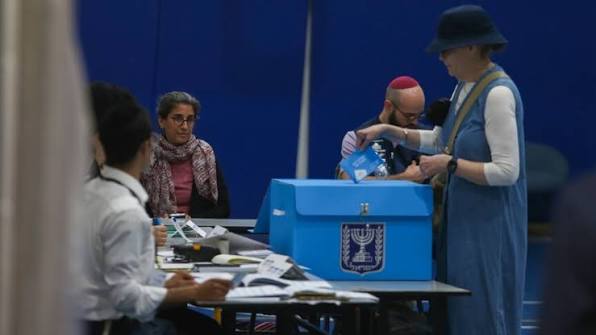
A history of Israeli elections can be drawn as a ledger. In one column stand the prime ministers: Ben-Gurion, Eshkol, Meir, Begin, Shamir, Rabin, Netanyahu.
Beside them are parties, coalitions and promises. In another stand Palestinians killed, displaced, evicted, or deprived of their homes.
The first column records who acquired the authority to govern. The second records what happened to people who had little or no power to withdraw it.
The entries resist easy addition. Reporting periods differ; a person displaced five times remains one person; demolition and appropriation are different acts. Yet the difficulty of producing a perfect sum does not dissolve the relationship the ledger reveals. Governments change. For many Palestinians, subjection outlasts the change.
One entry has a name. In October 2023, Abu Khaled, a forty-three-year-old resident of Khirbat Zanuta in the southern West Bank, described attacks on homes, water tanks, solar panels and cars. Armed settlers had threatened residents with death if they stayed. Twenty-four households, comprising 141
people, left with their livestock. Explaining his decision to the UN humanitarian office, Abu Khaled said: “I did this to protect my children.”
There is nothing obscure about that sentence. It states the same obligation on which the strongest defence of Israeli military action rests.
After October 7, Israelis had compelling reasons to demand protection. Hamas and other armed groups had murdered civilians and taken hostages. A government that failed to prevent another such attack would betray its most elementary duty. Any account that treats this fear as merely manufactured has
ceased to understand the people it hopes to persuade.
But Abu Khaled’s children also needed protection. Their father’s departure shows what happens when security is treated as a possession of one people rather than an obligation owed to persons.
One family’s claim is recognized as a reason for exercising power; another’s becomes a reason to leave.
Netanyahu’s defenders will object that this confuses a national struggle against armed enemies with individual suffering, however regrettable. Avi Hyman, writing in The Jerusalem Post before the election, offered the argument plainly:
Netanyahu had achieved historic military successes, and replacing him could jeopardize unfinished gains. Its appeal lies partly in its insistence that Israelis should judge the danger before them rather than seek the world’s approval.
The serious reply begins by granting the possibility of military achievement.
Suppose an adversary has been weakened, weapons destroyed and attacks prevented. What political relationship has the victory made possible? Where can Palestinians live, under whose authority, with what protection against expulsion?
Until these questions have answers, a list of successful operations describes a capacity to prevail, not a settlement capable of lasting.
This is also the limit of an argument centred entirely on Netanyahu’s character.
 Removing him could alter decisions, reopen investigations and relieve pressure on Israeli institutions. It would be consequential. Nevertheless, a more
presentable government could preserve the arrangements that made Abu Khaled leave. His family needs something more durable than a favourable result in an election it cannot influence.
Call people in this position the absent constituency: those whose daily possibilities a government determines, but whose consent it need not secure and whose rejection cannot remove it. The phrase does not imply that everyone affected by foreign policy should vote in another country. It identifies the special evasion produced by prolonged territorial control. An authority regulates movement, land and physical safety, then invokes the population’s political separateness to deny responsibility for its freedom.
The absent constituency is present everywhere power is exercised and absent where power is renewed.
Two states could resolve this through genuine Palestinian sovereignty. Shared sovereignty would require equality and consent. The constitutional form deserves argument; perpetual dependence deserves no presumption of legitimacy. A viable arrangement would also provide Israelis with enforceable protection against attack. Neither population can build a political future on the other’s continuing vulnerability.
Palestinian authorities belong within this scrutiny. In Amira Hass’s reporting, the Gazan poet Ni’ma Hassan rejects promises of eventual victory as an answer to the destruction of ordinary lives. “Even if you build paradise,” she writes, “we will not forgive what has happened and is still happening to us.” Her anger at Hamas does not acquit Israel. It claims a Palestinian’s right to judge both the force devastating her society and the movement that gambled with its survival.
That voice interrupts a familiar transaction in which outsiders offer Palestinians sympathy in exchange for the appropriate political allegiance. Hassan is entitled to something more demanding: institutions answerable to the people whose lives they put at risk. Hamas’s claim to resistance and the Palestinian Authority’s claim to representation both require that test.
Zanuta gives one entry in the ledger a father’s voice. Gaza exposes the inadequacy of the page itself. By July 2024, the UN was reporting up to 1.9 to 2 million internally displaced people there, many uprooted repeatedly. This was a displacement estimate, not a death toll. Counting each person once avoids inflating the number; it also leaves the fourth or fifth flight almost invisible. The same person occupies one statistical place while losing, over and over, the place in which a life might be resumed.
The ledger’s second column thus conceals duration as well as repetition. A displacement appears against a date; the search for a secure home continues afterwards. A school is recorded as damaged; its pupils lose a term, then perhaps another. Relief agencies count people reached, while families try to
reconstruct the relationships through which they once obtained work, care and shelter.
Khirbat Zanuta supplies a precise example. OCHA subsequently reported that some families began returning after an Israeli Supreme Court ruling in May 2024 directed the authorities to facilitate their safe return. In April 2025, settlers broke into the community’s recently rehabilitated school and damaged its classrooms. A legal opening for return had not secured the conditions in which return could hold.
This suggests a harder test of measures described as temporary: what remains after the order expires? The costs of an emergency can continue to accumulate long after its announced justification has passed. A court may recognize a right in one year while violence prevents its exercise in the next. The meaningful unit of recovery is therefore not permission alone, but the capacity to stay.
Here the word terror has a necessary place. Armed threats that make parents choose between flight and their children’s safety use fear to alter civilian life and possession of land. Israeli perpetrators are capable of such violence, and state protection or acquiescence can help it endure. Describing the coercion accurately requires evidence about acts and responsibility. It supplies no warrant for collective accusations against Israelis or Jews. The same attention to conduct identifies the terror in Hamas’s deliberate attacks on civilians. A political cause does not absorb the responsibility of its perpetrators.
A warrant bears a person’s name. The International Criminal Court’s November 2024 warrants name Netanyahu and former defence minister Yoav Gallant, alleging war crimes and crimes against humanity. They establish no conviction; the accused retain the presumption of innocence and the right to contest the proceedings. Their significance is the demand that particular officials answer for particular acts. Treating that demand as an accusation against Jews erases the distinction on which individual justice depends.
A change of leader, however, leaves the villager facing the same soldiers and the same settler next door. In its July 2024 advisory opinion, the International Court of Justice found Israel’s continued presence in the occupied Palestinian territory unlawful. It also described the West Bank’s divided legal order: Israeli civilian and criminal law for settlers, military law and courts for Palestinians. The two courts illuminate different failures. One concerns alleged crimes by named officials; the other concerns an order that a successor government would inherit.
For the neighbours living within that order, equality begins with practical questions. Who hears a complaint? Who protects a house? What happens when a court’s permission to return meets an armed threat at the school? The 2018 Nation-State Basic Law, reserving national self-determination in Israel to the Jewish people, brings the larger question of belonging into constitutional language. Its defenders point to the distinction between collective national rights and individual civil rights. The test of that distinction lies in the protection a person can actually obtain. Within Israel, equal citizenship needs an
enforceable guarantee; under occupation, Palestinians need effective protection and a route to political freedom.
No such reform requires the abolition of Jewish identity or agreement about Zionism. Jewishness is a religious, cultural and historical belonging; Zionism is a political tradition contested among Jews and supported by some non-Jews.
Neither “Gentile” nor “Palestinian” is its conceptual opposite. A workable equality protects these disagreements while preventing inherited identity from determining whose home is secure or whose claim receives a hearing.
The obligation extends to any future Palestinian state. Jewish residents, religious minorities, dissenters and women would possess rights enforceable against their own government. Liberation would be measured in their freedom to disagree, worship, organize and remain at home, even when a majority wished otherwise. Property claims will test this principle severely. A Palestinian family bringing evidence of dispossession deserves the hearing a Jewish family would receive.
The difficult work begins when a valid claim encounters a home occupied by someone else: judges will need common rules of evidence, protection for present occupants, and remedies that include return, restitution, compensation or agreed alternatives. Justice becomes credible in the care with which it handles both the original injury and the lives that have since grown around it.
Europe and the United States have instruments with which to support that change. The EU’s May 2026 sanctions against extremist settlers and supporting organizations recognize that dispossession can depend on finance and institutions as well as an armed individual at a village’s edge. Ezra Klein identifies the electoral trap: opponents can defeat Netanyahu while accepting his rejection of Palestinian statehood and his reliance on military solutions. Jon Finer identifies its diplomatic counterpart. He recalls how Washington spared the Bennett–Lapid government pressure partly to protect its fragile coalition, even as settlement activity increased; the coalition collapsed anyway. His argument is that a successor should earn support through changed conduct, rather than receive an advance exemption for being easier to deal with.
The foreign ministry has a ledger too. One column records disapproval; another records the weapons, money and diplomatic protection still supplied. The entries can coexist indefinitely because the speech answers domestic unease while the transaction preserves the alliance. A more agreeable Israeli prime minister makes that separation easier to maintain. Finer’s argument matters because it asks Washington to bring its two columns into contact: when an ally persists in conduct America condemns, what benefit does America actually withhold?
Europe faces the same question when it penalizes a violent settler while allowing the arrangements that sustain dispossession to retain their ordinary commercial advantages. A consequence becomes credible when changed conduct can end it. Its cost belongs with those directing the policy; making food or medicine scarcer would charge civilians once again for decisions they had no power to reverse.
An Israeli family’s protection against murder and abduction is part of the alternative these policies must sustain. So is a Palestinian family’s confidence that an evacuation will end in return rather than dispossession. Guarantees require institutions capable of enforcing them, including against armed actors claiming to defend either people. A peace plan that leaves enforcement to those who benefit from fear asks civilians to finance its optimism with their lives.
Return now to the ledger. The names in its first column will continue to change. The second will remain an indictment if each new government inherits the authority to decide Palestinian lives without inheriting an effective obligation to restore them.
Beside the record of harm, a third column is needed: what became possible again? A home reoccupied safely. A school that stays open. Land cultivated without armed threats. An Israeli child growing up beyond the reach of another hostage raid.
These are demanding measures of political achievement because they follow power into the lives on which it acts. A military success could then be judged partly by whether Palestinians recover a future; Palestinian political leadership could be judged partly by whether Israelis are safe within theirs. The obligations are reciprocal even where power, suffering and responsibility are profoundly unequal.
For Abu Khaled, the test begins at the place he left. It is whether protecting his children can cease to mean leaving home. An election acquires a larger democratic meaning when its consequences reach that family too: when a change of government can be read in the second column of the ledger, and eventually in the third.