A worker denied wages needs the muster roll. A candidate whose examination is cancelled needs a remedy before another year disappears. A voter struck off an electoral roll needs correction before polling, not an assurance afterwards.
Each is asking an institution for an answer, and in each case the institution can go on considering the question long after the citizen’s opportunity has expired. One side controls the procedure. The other pays for waiting.
Citizens pay by the hour: hours taken from studying, earning and caring. Institutions are funded by the year. The clock is a barricade the police do not have to erect. That asymmetry is the oldest fact in the politics of complaint, and the October 10 mobilisation at Delhi’s Jantar Mantar has brought it into public view.
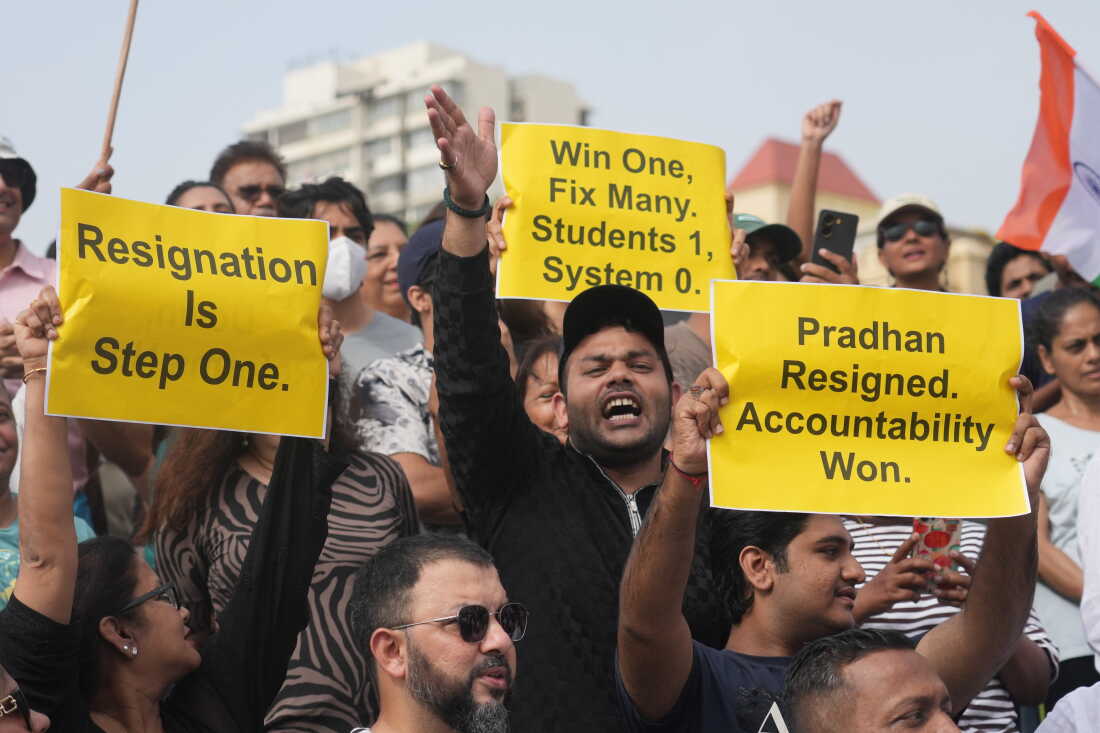
The Cockroach Janta Party (CJP) is demanding the election chief’s resignation over electoral-roll revisions, after an earlier campaign that ended in a minister’s resignation and a settlement whose terms are still being tested. Whether it matters will be decided less by the size of the crowd than by what citizens can secure once the crowd has gone home.
Alexis de Tocqueville spent his last working years on a puzzle: why a revolution that promised to demolish the old order kept, and in some respects extended, its administrative machinery. The king was gone; the intendants’ habits were not. The new rulers found a machine for managing citizens, found it convenient, and kept it.
Regimes are weather; administrations are climate. People rise against what they can see, and what they cannot see often outlasts the rising. The street organises itself around persons: a minister, a chief justice, an election commissioner. The institution organises itself around procedure, and a procedure has no face to resign. A resignation can be won in a season. The contracts, custody logs, registers and appeals that decide whether the departed official’s successor behaves differently are won, if at all, over years, by people the news will not name.
Tocqueville also feared a danger particular to democracies: equal, private and busy citizens handing public business to a vast and gentle power that spares them the trouble of attending to it. He looked for protection less in constitutions than in habits, above all the habit of association, by which free people learn to act together, keep accounts and hold one another to account. A generation that can assemble in a night has learned half of that lesson. The other half is slower.
None of this makes defeat inevitable. India offers two tests of the slower half, and they point in opposite directions.
In the villages of Rajasthan, workers who suspected they were being cheated of wages needed the documents that justified public spending. The Mazdoor Kisan Shakti Sangathan (MKSS) demanded the muster rolls, bills and vouchers. Public hearings then set the official account beside villagers’ knowledge of who had worked and what had been built. Records became evidence, and evidence let people contest the administration’s version of their own lives.
In April 1995 the chief minister announced access to records of local development works. A year later, accusing the government of going back on its word, MKSS began an indefinite sit-in at Beawar that lasted about forty days. When it reached Jaipur in May, the government responded with a committee and a two-month promise. A committee is a waiting room with a brass plate. The demand had been recognised and still not made dependable.
It survived because it left the street. The National Campaign for People’s Right to Information grew out of the Beawar sit-in and tied local struggles to the drafting of law. By the end of 1996 the Campaign and the Press Council of India, under Justice P. B. Sawant, had drafted a model bill. Parliament passed a Freedom of Information Act in December 2002 that was never brought into force. In July 2004 the Campaign took its recommendations to the newly formed National Advisory Council, and the Right to Information Act received assent on June 15, 2005, after repeated disputes over what citizens could actually obtain. The original demonstrators did not have to remain assembled for the demand to stay alive.
The law gave citizens appeals and potential penalties against information officers. The Central Information Commission explains that an officer must justify a denial on appeal and that the Commission’s decisions are binding. A citizen acquired standing that no longer depended on assembling another crowd. A movement wins lasting ground when its demand becomes a procedure strangers can use.
The ground remains contested. A report card on the information commissions for 2024–25, released as the Act turned twenty, found about 4.3 lakh appeals and complaints pending across the country, with the Central Information Commission itself headless and working with just two commissioners. The entitlement had survived two decades; timely enforcement had not become universal.
The second test points the other way. Irom Sharmila fasted from 2000 until August 2016 against the Armed Forces (Special Powers) Act. She was not alone. After the 2004 protests in Manipur the government appointed the Justice Jeevan Reddy committee, which recommended repeal in 2005, proposing instead that certain provisions be placed in the Unlawful Activities (Prevention) Act. The report was withheld from publication, and Human Rights Watch noted in 2008 that the government had not acted on it. In 2013 P. Chidambaram, a former home minister, said that the army’s very strong position against any amendment made it hard for the government to move. One analyst observes that agitation in the North-East diminished once the committee had reported. When Sharmila ended her fast, the demand was unmet.
This was not the RTI campaign under identical conditions. It tested a different boundary of state power: an institution whose interests were bound up with the power in question, and a campaign that had won a hearing but not a drafting table. Sustained protest, organised advocacy and a favourable official recommendation could coexist with no change in the law. Continuity matters, but only within a political field whose openings vary sharply. It cannot manufacture those openings or overcome every veto.
Jantar Mantar is asking for a resignation. In the past four years three of India’s neighbours have seen their streets obtain far more: a president who fled, a prime minister driven from power, a government that fell within a day. What has a movement won on the day the ruler goes?
Sri Lanka. In 2022 an economic collapse drove inflation to about 70 per cent and the currency down by nearly half. The Aragalaya, the “struggle”, demanded “system change” and new faces. Gotabaya Rajapaksa fled and resigned.
Parliament, the old Parliament, then elected Ranil Wickremesinghe, a veteran of the system the protesters had condemned. The demand found a vehicle only in September 2024, when Anura Kumara Dissanayake, who had won three per cent of the presidential vote in 2019, took the presidency at the head of the National People’s Power with about 42 per cent, followed by a supermajority in Parliament.
His government has since kept to the International Monetary Fund programme. The street won the first round. Others, two years later, contested the second.
Bangladesh. A student-led uprising ended Sheikh Hasina’s rule in August 2024. An interim government under Muhammad Yunus drew up the July Charter, a package of constitutional reforms that included prime-ministerial term limits, a bicameral parliament and proportional representation, and in February 2026 held what Carnegie’s Avinash Paliwal calls the first credible election in nearly two decades.
The Bangladesh Nationalist Party under Tarique Rahman won 209 of 300 seats; Jamaat-e-Islami won 68 and the student-led National Citizen Party six. The students who made the uprising inherited a moral claim, not a parliamentary one. Voters endorsed the Charter on the same day, by roughly two-thirds.
Yet Paliwal reports that the BNP objected to parts of it before the election, including how an upper house would be filled and how caretaker heads would be chosen, and has since shelved a separate secretariat for the Supreme Court that it had earlier backed. Bangladesh in 2026 stands roughly where India’s information campaign stood in 2004: the draft exists, the mandate exists, and the government that must enact it has reasons to dilute it.
Nepal. In September 2025 a ban on 26 social-media platforms met protests in which, Reuters reports, 76 people were killed over two days. Prime Minister K. P. Sharma Oli resigned on September 9. Former Chief Justice Sushila Karki led an interim government, Parliament was dissolved, and an election on March 5, 2026 gave the Rastriya Swatantra Party most of the seats; Balendra Shah became prime minister on March 27.
Nepal moved from protest to national election fastest of the three: about six months, against roughly eighteen in Bangladesh and twenty-six in Sri Lanka. Accountability moved more slowly. On March 28 police arrested Oli and his home minister, Ramesh Lekhak, on the recommendation of an inquiry commission that held Oli responsible for not stopping firing that killed at least 19 protesters on the first day. Al Jazeera reported on September 8 that they remained under investigation without formal charges, while other reports speak of criminal negligence charges.
Three lessons run through the three stories. A vacuum is filled by whoever is organised, and thrones are rarely empty for long: a party with a long history in Sri Lanka, the established BNP in Bangladesh, a young party in Nepal. None was the street itself, whose lasting power lies in choosing, and holding to account, whoever fills the space.
An endorsed text is not an enforced one: Bangladesh’s voters approved substantive reforms, and the contest then moved to drafting, dilution and enforcement, which is where the right-to-information campaign had to fight. And settlement and accountability run on slower clocks than removal.
Movements organised across platforms can assemble quickly; settling needs someone able to commit them; and the bereaved wait longest.
“Weak state” is too blunt a label for these cases, and “strong state” too blunt for India.
Four variables did most of the work, and they varied. Economic vulnerability was extreme in Sri Lanka and acute in Bangladesh, whose reserves had fallen to roughly three months of imports. The cohesion of the security forces differed: Bangladesh’s army declined to fire on protesters, while in Nepal police fire killed at least 19 on the first day.
Regime legitimacy had eroded in Bangladesh after the compromised election of January 2024, and in Nepal the government fell within a day of the deadliest protests. Administrative capacity, the variable Tocqueville would have watched, did not collapse with the governments: in Bangladesh, Paliwal concludes, much of the old order outlasted the revolution that installed the new one.
India differs on these variables in degree rather than in kind. There is no bankruptcy of the Sri Lankan kind, no sign of security forces wavering, and courts, ministries and a federal structure continue to operate. The October 10 demand is also smaller: one official’s resignation, not a government’s.
A government under this sort of pressure is more likely to concede a person and keep a procedure than to fall. That makes the Tocquevillian danger different, not smaller: absorption rather than collapse. The neighbours show what can follow a collapse. India’s own cases show what follows absorption.
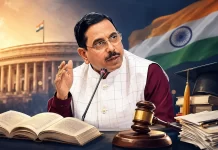
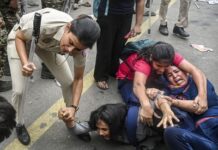
The newest Indian case is the CJP’s own. On July 25, after more than five weeks at Jantar Mantar, Education Minister Dharmendra Pradhan resigned and the CJP called off its agitation, saying the government had accepted all its demands: withdrawal of the FIRs against protesters, with a written guarantee promised within days; compensation for the families of students who died by suicide after the NEET-UG leak; and consideration of a five-point charter on examination reform. The CJP withdrew “in good faith”, it said, “with the understanding that the agreed-upon terms will be executed within the agreed-upon timelines.”
What followed is the thesis in miniature. On July 27 the CJP was still waiting for the written guarantee and gave the government until Tuesday. On August 25 its National Executive Committee said the commitments had not been implemented, noting that the Supreme Court had, by its account, three times asked the Centre for a consolidated list of the FIRs, and called a march for September 5. On September 1 the Supreme Court quashed the FIRs, the government told the Court it would frame a pan-India compensation policy within three months, and the CJP cancelled the march. Thirty-eight days, a threatened march and repeated judicial requests turned a promise into an order. The compensation policy, due around the start of December, is still a promise.
The examination law follows the same rhythm. The 2024 Act, in force from June 21, 2024, prescribed three to five years’ imprisonment for individuals who use unfair means. In May 2026 NEET was cancelled after an alleged leak and had to be held again.
Amendments assented to on July 31 raised the penalty to five to ten years and added a two-month deadline for investigations; PRS notes that there is no further provision if the deadline is missed. On July 28 Jitendra Singh told the Lok Sabha that 35 of the Radhakrishnan committee’s 46 key recommendations had been implemented and that special fast-track courts were being set up. A special court had already been designated for the NEET-UG leak case. Its first hearing, on July 27, was adjourned because no one appeared for the CBI.
Here the economics of attention do their work. A resignation or a stronger law is an event: immediate, attributable, reportable. Implementation is a process, dispersed across offices, courts and months. Officials receive credit for responding; news organisations obtain a clear development before moving their resources elsewhere; audiences receive an ending. A public response can finish the story before it finishes the work. No one need act in bad faith. A later failure then arrives as a new scandal rather than the unfinished business of an earlier promise, and only sustained scrutiny reattaches a promise to a name. The CJP’s deadlines, monitoring and appeals to the Court are that scrutiny. They are also what most protesters, with examinations to sit and wages to earn, cannot sustain.
Orwell’s complaint in “Politics and the English Language” was that political language is built to give “an appearance of solidity to pure wind”. That is a useful test, not a verdict. Announcements of reform are often sincere and still impossible to check. The minister who accepted the CJP’s compensation demand promised the families “whatever maximum will be possible”, under applicable rules. Each word may be meant. Together they contain no figure, no date and no office. “Operational”, “implemented” and “under review” belong to the same vocabulary. The question for any of them is what a stranger could go and look at: a court with a judge in it, a log with a name in it, a deadline with a consequence attached.
Which brings the argument back to Jantar Mantar. The Cockroach Janta Party began as a joke. On May 15 the Chief Justice of India compared unemployed young people to “cockroaches”, a remark he later said was aimed at people with fraudulent degrees. The next day Abhijeet Dipke, a former political strategist, launched the CJP in the insult’s name, and within days it reported hundreds of thousands of sign-ups.
Orwell also observed, in “Funny, But Not Vulgar”, that every joke is a tiny revolution. A joke of that kind recruits quickly because it refuses deference. But a joke is a match: it lights the room. A procedure is a hearth, and only a hearth keeps people warm after the match has burned down.
The CJP has since been building one. It has a National Executive Committee and, since August, a national team with Dipke as national convener. Its method has been to monitor commitments, set deadlines and carry the dispute to the Supreme Court, with a march held in reserve. A volunteers’ meeting on August 12, called to discuss its roadmap and organisational structure, was turned out of two venues; Dipke alleged pressure from the ruling party.
A movement that has made its point has several courses open, and most will combine them: contesting elections, as Nepal’s energy was channelled through a vote; building a standing campaign of the right-to-information kind; sustaining litigation and monitoring; or remaining an event, which is what many protests become and what the clock favours. The CJP’s course so far is pressure, monitoring and the courts. It is not yet a procedure strangers can use.
The RTI lesson is about the work beyond recruitment: retaining evidence, specifying remedies, scrutinising proposed provisions and following decisions. It is also about representation. The settlement of July 25 was agreed by a founder and two spokespersons for a movement of hundreds of thousands who had not chosen them, and it ended the protest the same afternoon.
That is not a criticism; someone has to be able to say yes. It is the question every movement must answer before its next settlement: who may negotiate which demands, and how an agreement can be challenged. An audience is not a constituency until it has a way to disagree. Neither a follower count nor the ability to remain on the street establishes a mandate, and the costs of staying fall unevenly.
The president of the All India Students’ Association, Neha Bora, fasted for 23 days at Jantar Mantar; lost wages, interrupted study and family obligations decide who else can stay long enough to exercise influence.
The test of any settlement is what it does for particular people. The candidate awaiting another test cannot wait for a criminal investigation that may take years; that candidate needs an administrative decision now. The examination authority should publish arrangements for retesting, fees and disputed results, with an appeal that can correct errors promptly, and the ministry must fund that remedy rather than leave the candidate to absorb the disruption.
Prevention needs its own sequence: an independently scrutinised account of where access or supervision broke down; recorded transfers and auditable access ahead of expensive technology; contracts that allocate responsibility; oversight that can reach the evidence. These are choices about resources and enforcement, not a list of desirable features.
For the voter disputing an entry, the deadline is polling day. Administrators need accessible reasons, assistance in person and enough staff to resolve contested cases in time. Existing appeals must be judged by whether they can deliver correction before the vote; any additional review mechanism needs legal authority, funding and the capacity to implement its decisions. A favourable decision after polling cannot return the opportunity lost.
Tocqueville held that free peoples depend less on their constitutions than on their mores: the unglamorous habits of keeping minutes, reading the file and returning to the office a second and a third time. The danger for a democracy with a vast and restless youth is subtler than repression. It is that the young will be heard loudly and answered slowly, and will take the volume of the first for the substance of the second. The street is an alarm bell; it cannot be the permanent wiring of accountability.
At Rajasthan’s public hearings, workers could set a payment recorded on paper beside the work actually performed. That encounter made a principle concrete. The corresponding test today occurs when a candidate challenges an examination decision or a voter disputes an entry: can the person inspect the reason, invoke an obligation and obtain a remedy before it becomes useless? Until that encounter is dependable, the empty street is no evidence that the work is done.