I received the notice last week. It arrived in a plain brown envelope from the local electoral office, part of the ongoing special revision of voter rolls. My name, my father’s name, my address — all correct. But attached was a demand: produce documents proving my citizenship, or risk removal from the list that has carried my vote for twenty-three years.
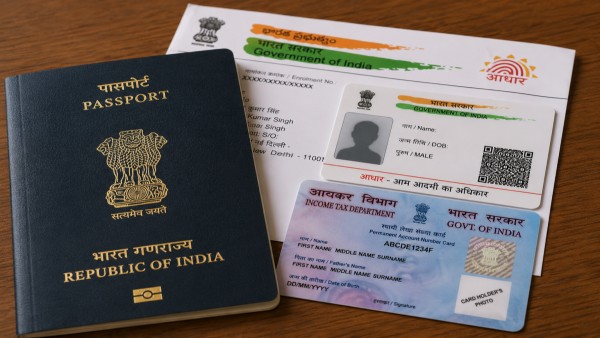
I am fifty-four years old. I was born in a small town in what is now Jharkhand, raised in Bihar, and have lived the last eighteen years in Delhi working as a clerk in a government-adjacent office. I have an Aadhaar card, a PAN card, a Voter ID, a ration card, and an Indian passport that I renewed three years ago after a trip to Singapore for a family wedding. My children study in government schools. I pay income tax when my salary requires it. I have never been arrested, never claimed benefits I was not entitled to, never lived anywhere but India.
None of these facts, apparently, is enough.
The letter does not accuse me of being a foreigner. It simply states that in the absence of “legacy documents” establishing my father’s or grandfather’s presence before certain cut-off dates — documents the state itself never systematically issued or preserved for people like us — my claim to citizenship stands in doubt. I must appear before an officer with birth certificates, school records going back generations, land papers, or affidavits from people who may no longer be alive. If I fail, I could lose the right to vote in the country where I was born.
I keep reading the letter and wondering: at what precise moment did I stop being Indian in the eyes of the machinery that governs me?
The law, I am told by those who can afford lawyers, places the burden on me. Under rules flowing from the Citizenship Act and the Foreigners Act, it is my responsibility to prove I am not a foreigner. The Indian passport in my drawer, the one that already required me to prove my citizenship once before it was issued, is now described by the government’s own external affairs ministry as merely a travel document, not conclusive evidence of nationality. My Voter ID, which the Election Commission itself gave me after verification, is treated as proof of identity but not of the deeper fact of belonging. Aadhaar, we all know, was never meant to certify citizenship at all.
So I sit with a pile of papers that once felt sufficient and realize they are scaffolding built on sand. My birth was registered late, in the 1970s, because the local registrar’s office was erratic and my parents were daily-wage workers who did not know the importance of a piece of paper. My father’s name appears with slight spelling variations across old ration cards and school ledgers — common enough when clerks wrote by hand and literacy was patchy. My grandfather left no land records because he was a landless laborer who moved for work after Partition-era disruptions. These are not unusual stories in India. They are the ordinary texture of how most of us entered the documentary state.
The state that now demands perfect chains of evidence is the same state that, for decades, treated civil registration as an afterthought. Birth certificates were not universal. Death records were patchy. Land and voter lists were maintained manually, prone to errors that compound across generations. Women’s names often disappeared from household documents. Internal migrants like my family carried their lives in bundles, not filing cabinets. When floods or riots or simply time destroyed papers, there was no systematic backup. The same “Mai Baap” government that now positions itself as the sole arbiter of belonging spent most of its history failing to create the basic records that would make belonging legible.
This is not an abstract failure. It has faces. In Assam, where a National Register of Citizens exercise was completed under court supervision, nearly two million people were excluded from the final list despite having lived their entire lives in India. Many were poor, many were women whose names never appeared on their fathers’ or husbands’ legacy documents, many were tripped up by spelling differences that any clerk could have created. Some were Bengali Hindus whose families fled persecution decades ago; others were Muslims whose families had tilled the same fields for generations. The process did not distinguish cleanly between infiltrators and the undocumented children of the Indian state’s own neglect. Appeals dragged on in tribunals where legal aid was scarce and orders were sometimes passed without the accused even being heard.
I do not live in Assam. But the logic travels. Once the principle is established that long-settled residents must re-prove their citizenship against shifting documentary standards, the risk spreads. Special revisions of electoral rolls are already underway in multiple states. NPR updates are budgeted. The infrastructure for large-scale verification exists and can be activated wherever political or administrative will appears. For someone like me — not wealthy, not connected, not literate in the fine print of the Citizenship Act — the cost of fighting exclusion is measured in lost wages, bus fares to district offices, and the quiet humiliation of explaining to officials why my life does not fit their forms.
The deeper injury is not procedural. It is the sudden discovery that the social contract I thought I had entered at birth was conditional all along. I did not choose to be born in India. I did not apply for citizenship like a naturalized foreigner. I simply existed here, participated in its economy, obeyed its laws, and raised the next generation inside its borders. In return, I expected the state to recognize me as one of its own without requiring me to litigate my grandparents’ presence every time a new verification drive is announced. That expectation now feels naïve.
It is not that I am blind to the anxieties of a nation. I know our borders are porous, that migration leaves complicated footprints, and that a state must know who belongs if it is to secure its borders or distribute its grain. I am a clerk; I understand the necessity of files. Fake documents exist, born of the very corruption that thrives in the corridors where I work. But there is a profound cruelty in shifting the entire weight of historical state failure onto the shoulders of those who survived it. The machinery defaults to suspicion, demanding that I disprove a lie it hasn’t even formally accused me of, using papers it forgot to issue fifty years ago.
Instead, we have a system that treats citizenship as something that can be revoked by bureaucratic default. The same government that issues Aadhaar to hundreds of millions to deliver subsidies now tells those same people that Aadhaar proves nothing about their fundamental status. The same machinery that accepted my Voter ID application years ago now questions the citizenship that made me eligible to apply. The circularity is not accidental; it is the product of a state that expanded its reach into citizens’ lives faster than it built the foundational architecture of belonging.
What happens to a person in my position? If I cannot produce the required legacy papers — and I am increasingly certain I cannot — I will have to hire someone to navigate the appeals process, spend money I do not have on affidavits and middlemen, and live with the permanent anxiety that my name might disappear from the rolls before the next election. My children, who have even fewer old documents tying them to a specific place, will inherit the same vulnerability. We will remain physically present, economically active, and culturally Indian, yet legally precarious — citizens in every way that matters to daily life, foreigners in the eyes of the verification state.
I do not know how many others are sitting with similar notices tonight. I only know that the number is unlikely to be small, and that most of them will be poorer and less educated than I am. They will not write op-eds. They will simply try, and often fail, to assemble the impossible proof that the country of their birth now requires of them.
I was born Indian. I have never been anything else. If the state that claims the sole authority to certify that fact cannot see it without papers it never gave my family, then the crisis of identity it keeps discovering is not mine alone. It belongs to the machinery that forgot, for too many decades, to make belonging something a citizen could take for granted. — A Citizen