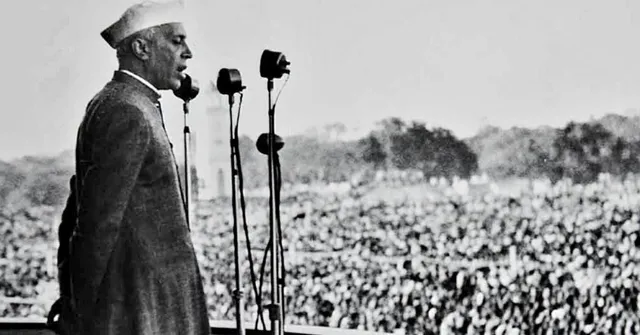
On the pretext of the 137th birth anniversary of Pandit Jawaharlal Nehru
I was eleven years old when the news of Jawaharlal Nehru’s death arrived on May 27, 1964. During the summer vacation in my childhood, I had gone to my paternal aunt’s village, Shindkheda, which is a taluka place in Dhule district, to stay at her house. My aunt had purchased a brand new, latest model radio from the Philips company. So, just before 2:00 PM on May 27, 1964, the regular radio broadcast programs were suddenly halted, and hearing the news of Prime Minister Jawaharlal Nehru’s death due to a heart attack caused me profound grief.

Because shortly before that, in the month of April, during the campaigns for the third Lok Sabha elections, I had accompanied my father—who, being a freedom fighter and a committed Congress worker, went out for election campaigning. (It was by imitating him that I started wearing Khadi since my childhood.) At an election meeting held by my father in a village close to our own, people from the opposition party created a ruckus and threw some stones. A stone struck me right at the outer corner of my right eye, leaving me bleeding profusely. Someone hurriedly brought turmeric powder from somewhere, packed it into the wound, and tied it up with a cloth. What happened after that? I do not remember. Perhaps I had fainted.
With my right eye partially spared after Jawaharlal Nehru became India’s Prime Minister for the third time, I was listening to the news of his passing away from this world with immense grief and a strange, profound curiosity. I remained despondent for a long time.
That afternoon of May 27, 1964, and for many days thereafter, perhaps this was the first occasion after the death of my grandfather that kept me in a deeply sorrowful state of mind for quite a long time. During that period, I cut out all kinds of information, photographs, and news reports related to Jawaharlal Nehru published in daily newspapers with scissors and pasted them into my notebook using gum. However, due to changing my place of residence for studies after the seventh grade, and moving completely to Amravati for college studies after the eleventh-grade board exams, all my carefully preserved collections from the first to the eleventh grade were left behind in my fifteenth year. Today, after 60 years, everything suddenly appears before my eyes like a moving cinematic film.
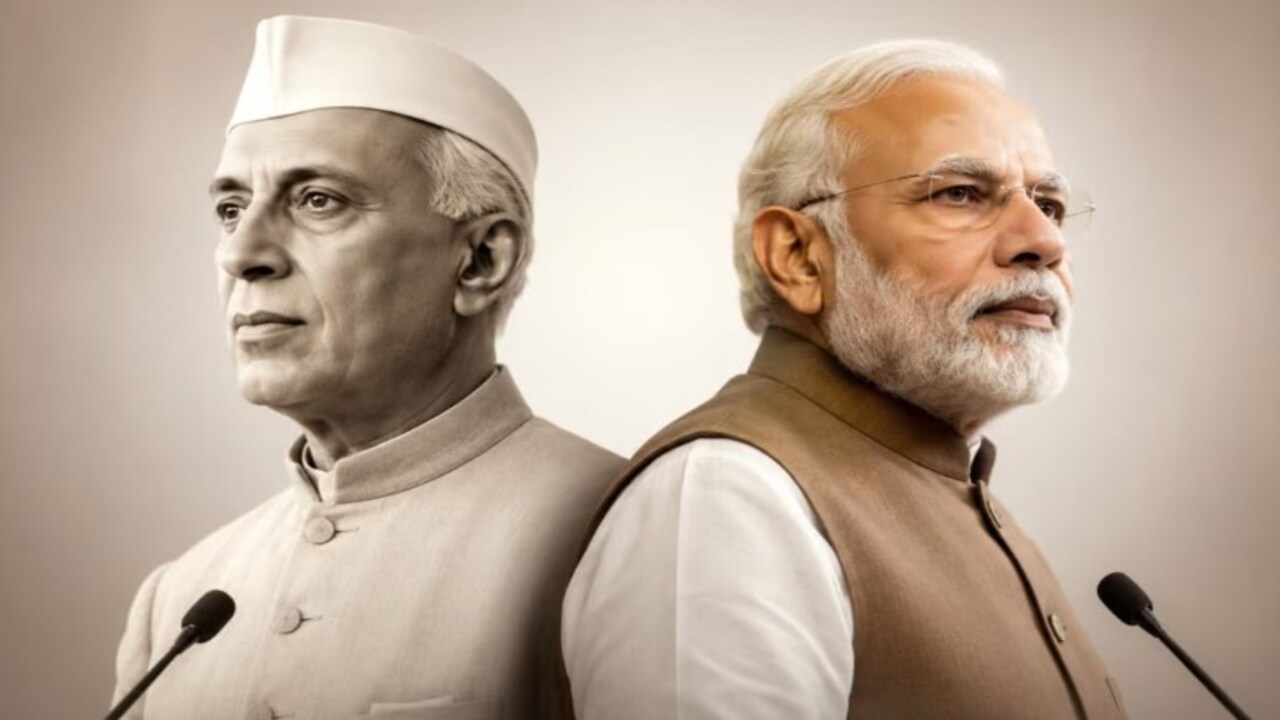
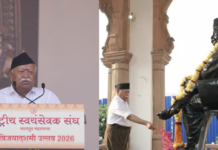
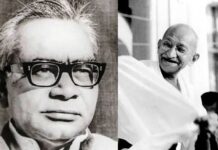
For the past twelve and a half years, the current Prime Minister Shri Narendra Modi—who occupies the position once held by Jawaharlal Nehru—has been running a campaign of iconoclasm against him due to his personal grievances. People of our age group, having come under the influence of Dr. Ram Manohar Lohia after the age of sixteen, also remained in the anti-Nehru camp for a considerable time. However, people of the Rashtriya Swayamsevak Sangh, and primarily the current Prime Minister, suffer from Nehru-phobia, causing them to criticize Nehru ji every now and then. For twenty-five to thirty years of our lives, we ourselves carried an attitude of neglect toward Jawaharlal Nehru ji.
In 1985–86, the Sangh Parivar seized upon the slogan that emerged from the Shah Bano issue—that “the question is not about the law, but about faith”—and L.K. Advani initiated a series of rath yatras starting from Somnath on the issue of the Babri Masjid and Ram Mandir. During one such bizarre rath yatra program organized in the name of Shilapuja, the communal riots that broke out in Bhagalpur on October 24, 1989, and the sole objective of the Rashtriya Swayamsevak Sangh to plunge the Muslim community into a completely insecure mindset, forced me to re-examine all my beliefs. It gave me the opportunity to introspect and rethink Mahatma Gandhi, Jawaharlal Nehru, Rabindranath Tagore, all important socio-political leaders, and my own views. Perhaps today, on the pretext of Jawaharlal Nehru’s 137th birth anniversary, openly acknowledging my thoughts, the credit for keeping a country of multi-dimensional culture like India bound together in unity up to 79 years of independence goes first to Mahatma Gandhi and second to Jawaharlal Nehru.
The ruling party of the present time and its parent organization, the Rashtriya Swayamsevak Sangh, have taken a vow to leave no stone unturned in transforming this multi-dimensional, multi-cultural country into a Hindu Rashtra. For that purpose, a continuous smear campaign is being run against India’s first Prime Minister Jawaharlal Nehru by the Saffron Digital Army, character-assassinating him by blaming him for everything from the partition of India to Article 370 in Kashmir, and calling him pro-Muslim.
Following the demolition of the Babri Masjid on December 6, 1992, the Rashtriya Swayamsevak Sangh has been carrying out a 101-year-old agenda of practicing communal polarization politics centered around Kashi, Mathura, almost all mosques, Qutub Minar, the Taj Mahal, the Red Fort, all historical structures built during the reigns of Aurangzeb and other emperors, and various religious sites—initially at a slow pace, and now openly and aggressively.
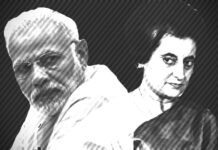
The post-independence atmosphere remained intact without causing significant damage to the country’s unity and integrity even after 79 years of freedom, purely because Mahatma Gandhi fulfilled his responsibility toward tolerance and Jawaharlal Nehru toward secularism. On the contrary, Pakistan, which was created solely on the basis of religion, saw its East Pakistan wing break away within twenty-five years on linguistic and cultural grounds to form an independent nation called Bangladesh, a role in which Jawaharlal Nehru’s daughter Indira Gandhi played a vital part in 1970–71.
Presently, due to the fascist ideology of India’s ruling BJP and their parent organization the RSS, saffron digital media entities have resolved and are continuously trying to convert this country into a Hindu Rashtra. Similarly, over the past two years in America, Donald Trump—by running an “America First” slogan and engaging in such polarizing politics for the first time in America’s 450-year history—faced defeat in the recent midterm elections, where the Republican Party lost and the Democratic Party secured majorities in both houses. Because Trump also initiated communal polarization politics in America, sided with Israel, and triggered a war against Iran that plunged the entire world into an economic crisis due to soaring oil prices, people in America were disgruntled over rising inflation. Consequently, due to dynastic tendencies and religious polarization, the multi-dimensional American populace voted against Trump.
Looking at the results of this election, the BJP and its parent organization RSS at least need to learn some lessons; otherwise, in a multi-dimensional country like India, leaders like Jawaharlal Nehru—who during the partition riots in Punjab, Delhi, or Kolkata personally brandished sticks to challenge mobs—stand in stark contrast to the current Prime Minister. Following the burning of the S-6 coach of the Sabarmati Express on February 27, 2002, he rushed 200 kilometers away to Godhra, and later handed over 59 half-burnt corpses to Jayesh Patel, the president of the Vishwa Hindu Parishad, to take out a procession on the streets of Ahmedabad (despite opposition from the then Godhra Collector, Jaishree V. Ravey). It is natural for Shri Narendra Damodardas Modi—who as Chief Minister later wrote a letter calling in the army to maintain law and order in Gujarat, but kept that very army confined outside the Ahmedabad airport for three days (a fact revealed by Lieutenant General Zameeruddin Shah, author of the book The Sarkari Muslim)—to harbor resentment toward Jawaharlal Nehru.
In my own opinion, the partition of our country occurred due to the actions of people from both communities who engaged in such divisive maneuvers.
Had India not been partitioned, Narendra Modi would have had nothing else to do except sing the RSS prayer “Namaste Sada Vatsle” and engage in routine RSS activities.
The Rashtriya Swayamsevak Sangh deliberately and conspiratorially stayed away from the Indian freedom struggle. On the contrary, people who called those recruited into the British army and police, as well as intelligence agencies—whether the IB, CID, or today’s modern agencies like the NIA, CBI, and ED—”parrots” (during Congress rule), are now weaponizing these very agencies according to their own convenience. Primarily, all these agencies are being used solely to take action against their political opponents.
And the most serious matter is that previously, stories were only heard about governments being made and toppled in Kashmir with the help of agencies. But now, agencies are being openly utilized to make and break state governments in places like Maharashtra, Goa, Karnataka, and Madhya Pradesh to dislodge opposition governments in India, rendering our country’s electoral system nothing more than a charade. Furthermore, governors have virtually turned Rajbhavans into BJP offices; not a single governor extends even the slightest cooperation to opposition-party governments.
Witnessing instances over these eighty years since independence where all constitutional institutions have been forced to act according to the ruling party’s agenda, public trust in the Election Commission, judiciary, police, and administrative sectors is eroding day by day. Consequently, a massive nationwide movement is underway against the Election Commission.
It is in this context that the legacy of Jawaharlal Nehru comes to mind again and again.
Aware of the dangers posed by his own immense popularity, the man who wrote an article titled “We Don’t Need Any Dictator” under the pseudonym ‘Chanakya’—not just to warn fellow citizens, but to caution himself against these very dangers. On the other hand, when social thinker and psychoanalyst Ashis Nandy published an article in the English magazine Outlook offering a psychological analysis of Narendra Modi after the Gujarat riots, Modi filed a multi-million rupee lawsuit against him. (It is unknown what happened to that case.)
For him, democracy was not merely a system of governance, but a core value and ethos that needed to be embedded from governance down to the social psyche. He truly considered himself the prime servant of the country. Along with regular press conferences, Nehru used to write monthly letters to chief ministers, discussing national and international developments alongside topics like the government’s responsibility toward art and culture. After him, the tradition of the Prime Minister writing regular letters to chief ministers came to an end. In the past 12 years, a press conference by the Indian Prime Minister has become an unimaginable concept. Because when interviews are conducted at the Prime Minister’s residence, they are designed not for sharp answers to tough questions from preferred journalists or film artists, but for picturesque answers to poignant queries like whether he eats mangoes whole or sliced, whether he keeps a wallet in his pocket, or if he takes a tonic to avoid fatigue.

It must never be forgotten that this situation did not arise on its own; it has been engineered through systematic efforts. Television debates now rival neighborhood street brawls, stand-up comedy, and horror shows. Expecting accountability from the government is no longer viewed as a democratic right, but as a grave sin. A strenuous effort is being made to make people forget that democracy is not merely a game of numbers, but a system run on the foundation of institutions, decorum, and traditions—a system that engages in respectful dialogue with the minority, not a system that grants the majority the license to act arbitrarily, nor a debating society run for the entertainment of the privileged.
The irony is that the aspirational middle class—which treats democracy as a burden or merely a game of numbers—expanded so rapidly precisely as a result of the pro-development policies of liberalization and privatization adopted by the Congress government. But alongside privatization and liberalization, wasn’t it equally essential to preserve a social mindset that understands the value of democracy and respects India’s pluralism and unity in diversity, turning these values into a foundational ethos for the new generation?
Without asking this question, it is impossible to understand why Indian democracy is rapidly transforming into a hollow formality and majoritarianism. Why are Nehru’s memories and the awareness of his contributions disappearing from the psyche of the new generation? This question must be asked by Nehru’s own party, the Congress, as well as by everyone who understands the importance of Indian democracy and wishes to preserve it. Many among them were convinced until 2014 that the institutional foundation of Indian democracy had grown strong enough that a dictatorial mindset could do it no harm. In 2015, during a TV debate, when I stated that “the current Prime Minister doesn’t even need to formally declare a state of emergency; he and his supporters are capable of creating an atmosphere of fear without any such declaration,” not only BJP spokespersons but also a hugely popular anchor among liberal and democratic circles became furious. Not just them, but leading scholars both in India and abroad were convinced that India’s democratic institutions had grown so robust that the revival of a dictatorial mindset was impossible.
Events over the past few years have exposed the limitations of this belief. Today, our Election Commission, the bills passed in our Parliament, and our judiciary—which began delivering judgments under majoritarian pressure following the Babri Masjid demolition—along with the scholars who justify them, reflect this reality. In a way, this country is quietly becoming an unannounced Hindu Rashtra. Today, in memory of Jawaharlal Nehru, instead of performing empty rituals by merely chanting praises of his name, we need to take a solemn vow to step into the field with resolve to build a truly secular, socialist India, confront these communal forces, and dedicate ourselves entirely.