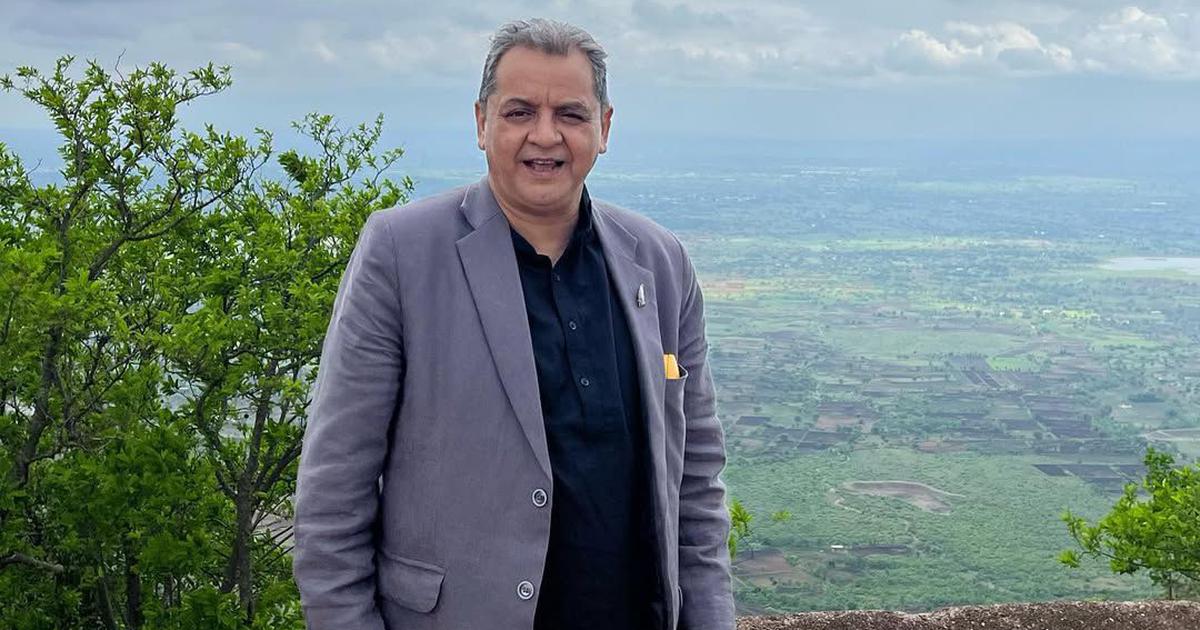
Sankarshan Thakur, one of India’s most distinguished journalists and the editor of The Telegraph, passed away on September 8, 2025, in Gurgaon, succumbing to complications from lung cancer at the age of 63.
His death marks the end of an era in Indian journalism—a voice that blended poetic eloquence with unflinching courage, illuminating the nation’s political tumult and human resilience for over four decades.
In a media landscape often besieged by compromise, Thakur stood as a beacon of integrity, his words a scalpel dissecting power while his heart remained tethered to the people he chronicled.
Born in Patna in 1962, Thakur was the son of Janardan Thakur, a trailblazing journalist whose influence shaped the son’s path from the outset.
Janardan, a dear friend, was known for his sharp insights and unyielding spirit; he veered young Sankarshan toward journalism even as the boy passed out of Hindu College, Delhi University, with a degree in political science.
The elder Thakur’s bond with M.J. Akbar, a mentor with a cult-like following in his youth, further enriched this legacy—Akbar’s Sunday magazine became Sankarshan’s early proving ground in 1984, where his distinctive style began to emerge, marked by a reporter’s nose for truth and a writer’s gift for narrative.
Thakur’s career was a tapestry of frontline reporting and editorial mastery. From the 1984 anti-Sikh riots to the Kargil War’s frozen heights and Kashmir’s shadowed valleys, he captured history’s raw edges with nuance and empathy.
His dispatches from Kargil, penned amid personal grief over his father’s death, remain riveting testaments to war’s human cost.
In Bihar, his homeland’s political cauldron, Thakur’s books—The Making of Laloo Yadav, Subaltern Saheb, Single Man: The Life and Times of Nitish Kumar, and The Brothers Bihari—dissected the rise and rivalries of figures like Lalu Prasad Yadav and Nitish Kumar with forensic precision and literary flair.
As political editor at The Indian Express and later editor at The Telegraph, he crafted formidable front pages, sharp editorials, and headlines that cut deep, blending a reporter’s instinct with an editor’s balance. His weekly column “Lazy Eye” wove wit and wisdom, engaging readers with insights that transcended the newsroom.
What set Thakur apart was his fearlessness—a quality that made him as comfortable on the road, chasing stories in Varanasi’s sweltering streets or Bihar’s dusty bylanes, as in his office. He humanized the machinations of power, calling out corruption and majoritarianism without fear, yet always with a patriotism that sought to mend societal fissures.
Some questioned his editorial stance toward West Bengal Chief Minister Mamata Banerjee, seeing in it a tactical softness; but as any seasoned leader knows, securing one flank allows for broader reach in the battle for truth.
Thakur’s unique editorship—adorned with owl brooches, signature jackets, and sentences that sparkled like Maithili poetry—earned him accolades, including the Prem Bhatia Award for political journalism in 2001 and the I.F. Stone Medal for Journalistic Courage.
Survived by his wife Sona, daughter Jahan—a conservationist with INTACH—and son Ayushman, a law graduate from Jindal University, Thakur leaves behind a family as resilient as the stories he told.
Colleagues remember him not just as a titan but as a warm host, savoring mutton with litti, and a mentor who thanked sub-editors for sharpening his craft. In an age of fleeting headlines, he embodied journalism’s noblest calling: to witness, to question, to illuminate.
Sankarshan Thakur did not merely report India; he etched its soul into our collective memory. His light endures, a reminder that true power lies in words unafraid. Om Shanti.