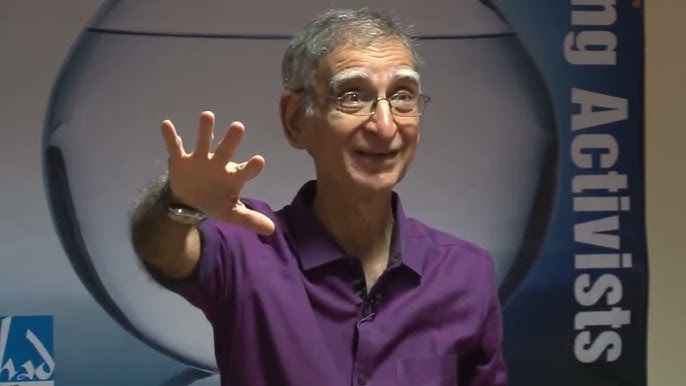
My friend of more than fifty years, Dr. Ram Puniyani, completes eighty years of life today. That means it has been eighty years since he came into this world. At one point, Ram served as Registrar at Government Medical College, Nagpur. During that time, the revolutionary transformations in Cuba under Fidel Castro and Che Guevara, and student movements across some European countries, formed the backdrop of our era.
Around 1972–73, Ram, along with Dr. Mukund Vaidya and some other friends, tried to start a study circle under the name Spark Socialist Forum, housed in a room at the Matru Seva Sangh Blood Bank in Sitabuldi (Nagpur). Today’s youth may not even know of this activity, so I am attempting to throw some light on it.
In the 1970s, students in IITs, medical colleges, and other higher education institutions across Maharashtra, Bengal, and South India had started similar study circles. That is when my bond with Ram began. At that time, we too were organizing such circles in Amravati Medical College under the banner of Rashtra Seva Dal. The reason was simple: India back then was facing a political and social situation quite similar to what we are witnessing today. The present situation is arguably the worst in the 78 years of independent India, but even in the 1970s, movements against price rise, unemployment, and corruption were slowly taking shape. Only communalism had not spread as venomously at that point, especially since communal forces were still weakened in the aftermath of Mahatma Gandhi’s assassination. In fact, instead of focusing on temple–mosque conflicts, even such groups were trying to join movements against inflation, unemployment, and corruption.
After twenty-five years of independence (in 1972), Indian society had begun publicly debating: What have we achieved, and what have we lost in 25 years? Such discussions were widely prevalent and found reflection in student-led study circles in medical, engineering, and other higher educational spaces. Globally too, revolutionary developments in Cuba, Chile, Panama, the Vietnam war, and in South Asia the Bangladesh liberation war and the Naxal movement in Bengal, were shaping the atmosphere. During those heady, turbulent days, Ram was about 25–30 years old, while we were around 20.
Movements inspired by Jayaprakash Narayan’s Tarun Shanti Sena, Yuvak Kranti Dal, and the Dalit Panther movement began emerging at the same time. Thus, the decade of the 1970s and early 1980s was one of intense political ferment not only in India but worldwide – from student uprisings in France to struggles across the global South. We too were part of those contributions in our own modest ways.
Our circle of friends back then included Dr. Ram Puniyani, Jitendra Shah, Praful Bidwai, Kishor Deshpande, Dinanath Manohar, Sudhir Bedekar, Subhash Kane, Latif Khatik, Namdeo Dhasal, Dr. Kumar Saptarshi, Dr. Arun Limaye, Dr. Anil Awachat. Among our seniors, we were deeply influenced by Prof. Narhar Kurundkar, Hamid Dalwai, Prof. A.B. Shah, Yadunath Thatte, Baba Amte, Prof. G.P. Pradhan, Prof. D.K. Bedekar, Prof. Prabha Ganorkar, Vasant Abaji Dahake, Prof. D.Y. Deshpande, Natu Madam, Acharya Dada Dharmadhikari, Mama Kshirsagar, Vasant Palshikar, Datta Sawle, among others. Exposure to such minds gave us a broader worldview. Working simultaneously across Spark Socialist Forum, Yuvak Kranti Dal, Dalit Panther, Tarun Shanti Sena, and especially through my main organization Rashtra Seva Dal and Chatra Yuva Sangharsh Vahini, we kept growing in the commitment to discuss, debate, and act on the most serious national and global issues.
Ram’s family had migrated from Pakistan to Nagpur during Partition. Though born in Nagpur himself, he grew up amidst stories of Partition at home. But instead of joining the path of sectarian politics like L.K. Advani, Ram pursued the path of people like Kuldeep Nayar, Justice Rajinder Sachar, and Gour Kishore Ghosh – taking a stand against communalism so that the country never faces another Partition in the name of religion.
This commitment lies at the heart of his life’s work: “No more partitions.” Sadly, a large number of Partition-affected families, especially those from Bengal or Punjab, carried a deep pain that often turned into anti-Muslim prejudice. The RSS has shrewdly cultivated these scars to continuously sow divisions. Yet in India, despite 67 years of systemic effort, communal forces gained full political power only in 2014 – when the BJP, schooled in RSS ideology, rose to power, combining Hindutva polarization with support for big capital.
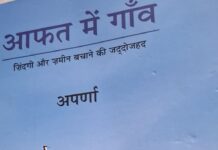
It was in this atmosphere that Dr. Ram Puniyani decided to resign from his secure post as Professor of Biomedical Engineering at IIT Mumbai to devote himself entirely to the secular movement. He has since authored over a hundred books and spoken at thousands of seminars and public gatherings across India. His work in awareness-building and writing against communal violence is possibly unmatched in the secular movement in India.
Although families that suffered Partition wounds, whether in Bengal or Punjab, could never fully free themselves of the pain, the RSS has only sought to keep reopening these wounds. Nevertheless, people like Ram have tried to heal them, reminding society that communal violence only destroys us further.
His family’s financial success in cloth trade had given them ample resources; in fact, they even acquired over 10,000 square feet of land at Ramdas Peth (Nagpur’s hospital hub), so that Ram could set up a private hospital like many others. But his passion for social and political work was stronger. He first worked among industrial workers in Nagpur, and later, on the invitation of Praful Bidwai who remarked, “You speak Hindi so well, you must work among Mumbai’s workers,” shifted to Mumbai, India’s industrial heartland.
By the 1980s, Ram had begun working at the IIT Bombay hospital, and eventually became Professor in the newly formed Biomedical Engineering department. From the demolition of the Babri Masjid in 1992, his life was increasingly dedicated to writing and speaking against communalism. After the Gujarat pogrom of 2002, he took premature retirement from IIT and became a full-time activist, educator, and writer against divisive communal politics. Today, at the age of eighty, he remains active, known not only across India but also internationally for his clear, fearless voice in both English and Hindi.
I too have been closely linked with him, especially since the Bhagalpur riots of 1989, after which we both became even more deeply connected in this struggle. On this occasion of my committed friend’s 80th birthday, I wish him continued health, long life, and renewed vigor in our common struggle for justice, equality, and secularism.