
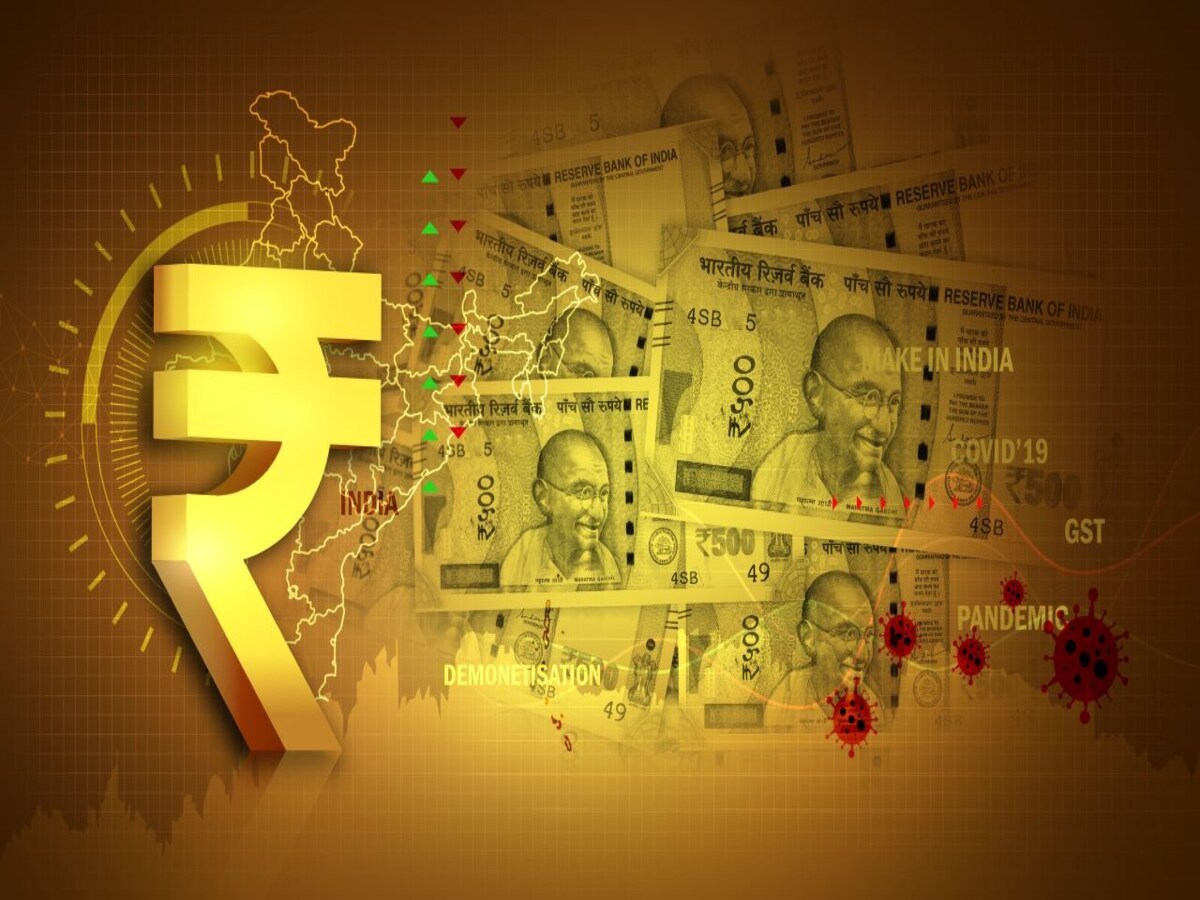
In the bustling bazaars of Delhi or the gleaming tech hubs of Bangalore, one might be forgiven for believing India’s economy is a juggernaut, hurtling towards superpower status.
Official figures paint a rosy picture: gross domestic product (GDP) growth of 7.8% in the first quarter of the 2025-26 fiscal year, propelling the economy to an estimated $4.19 trillion in nominal terms for 2025, according to the International Monetary Fund. 
Yet whispers—and sometimes shouts—from economists suggest this luminosity may be more will-o’-the-wisp than bonfire.
A provocative online missive, circulating in September 2025, accuses India of “cooking up” its economic data since 2015, inflating GDP by nearly $2 trillion. It lambasts demonetisation as an economic catastrophe, GST as a rollout nightmare, and pins the economy’s survival on remittances from overseas workers.
Corruption, it claims, is the unofficial tax on daily life, while Indians prioritise piety over prosperity. Such hyperbole merits scrutiny, for it captures a kernel of truth amid a fog of exaggeration.
India’s growth story is real, but riddled with distortions, inefficiencies, and systemic rot that demand sober analysis.
The core allegation—that India overstates its GDP by $2 trillion—is sensational but shaky. The post lists India’s GDP at a mere $2.3 trillion, trailing behind Italy and Canada in a purported “unadulterated” ranking.
This figure appears plucked from thin air or outdated estimates; current projections place India at around $4.19 trillion for 2025, making it the world’s fourth-largest economy, having overtaken Japan earlier this year.  The IMF’s April 2025 outlook concurs, forecasting $4.187 trillion. 
Yet the concern over overestimation is not baseless. It echoes a debate ignited in 2019 by Arvind Subramanian, India’s former chief economic adviser, who argued that methodological changes in 2015 inflated growth figures by 2.5 percentage points annually between 2011 and 2017.
Those revisions shifted the base year from 2004-05 to 2011-12 and incorporated new data sources, such as corporate filings from the Ministry of Corporate Affairs. Critics contend this failed to capture the vast informal sector, which employs over 80% of the workforce and was hammered by shocks like demonetisation.
Fast-forward to 2025, and the scepticism persists. The National Statistical Office reported 7.8% real GDP growth for April-June 2025, a five-quarter high driven by manufacturing (up 7%) and services (up 7.2%). 
But analysts at HSBC and Goldman Sachs cry foul, attributing the surge to unusually low GDP deflators—the metric that strips inflation from nominal figures to yield “real” growth.  HSBC estimates that if services deflators were aligned with consumer price inflation (around 5-6% for services) rather than wholesale prices (closer to 2%), real growth would plummet to 5.5%. 
Nomura concurs, suggesting statistical artefacts mask weaker underlying activity.  Discrepancies abound: corporate sales growth lags GDP figures, and private consumption—60% of the economy—grew an about 7.4% in the quarter, belying the headline triumph. 
Low deflators understate price rises, particularly in services, which constitute 55% of GDP. India’s deflator for services often mirrors goods inflation, ignoring stickier costs in education, healthcare, and transport. This isn’t outright “cooking,” as the post alleges, but a methodological quirk that amplifies optimism.
The World Bank and IMF have echoed doubts, with the latter projecting just 6.4% growth for 2025 overall—a far cry from the government’s boosterism.  Subramanian’s ghost haunts: if overestimation persists, India’s true GDP might be closer to $3 trillion than $4 trillion, aligning with the post’s $2.3 trillion claim only if one squints hard. Yet evidence for a $2 trillion inflation is scant; it smacks of conspiracy rather than calculation.
The post’s proxy suggestion—using taxpayers as a proportion of the economy—has merit for gauging realism. India’s tax-to-GDP ratio hovers at 18%, low for its income level, with direct taxes from just 7% of the population (about 100 million filers in a 1.4 billion-strong nation and a large number just file without paying taxes and about 13 million actually pay any taxes).
This underscores the informal economy’s dominance, where cash transactions evade scrutiny. If formal activity is overstated, GDP follows suit. Forex reserves, at $670 billion in mid-2025, provide a buffer against shocks, but the post rightly flags restrictions: a 20% Tax Collected at Source (TCS) kicks in on foreign remittances exceeding Rs 7 lakh ($8,400) annually for most purposes, except education and medical (5% above that threshold). 
This discourages legitimate outflows, ostensibly to curb capital flight, but stifles global integration. Buying forex incurs TCS, refundable via tax returns, yet it burdens the middle class and fuels black-market dealings.
Demonetisation, the 2016 bombshell that invalidated 86% of currency overnight, remains a sore point. The post nails it: no flood of black money surfaced, and the economy reeled. GDP growth dipped to 6.8% in 2016-17 from 8.3% prior, with employment contracting by 1.5% in affected districts. 
Small businesses, reliant on cash, shuttered; informal workers migrated en masse. A CEPR study found output fell 2-3% in cash-intensive regions, with credit drying up.  The promised war on corruption yielded paltry gains: just 1.8% of demonetised notes didn’t return, far from the expected black-money bonanza.
Eight years on, digital payments surged—UPI transactions hit 14 billion monthly in 2025—but at what cost? The economy’s “chugging along,” as the post says, owes much to resilience, not policy genius.
GST’s rollout in 2017 fares little better. Billed as a unifying tax reform, it devolved into chaos: multiple slabs (0%, 5%, 12%, 18%, 28%), compliance nightmares via glitchy portals, and inverted duty structures that trapped input credits.  Small firms, unaccustomed to monthly filings, faced penalties; exports stalled amid refund delays. Collections initially dipped, and cascading taxes persisted in sectors like textiles.
Reforms have streamlined it—rates rationalised, e-invoicing mandated—but the post’s “nightmare” label sticks. Revenues now top $224 billion annually, yet complexity persists: a 2025 revamp aims to merge slabs, but at a $20 billion hit to collections, per IDFC First Bank. GST boosted formalisation, but at the expense of the informal sector’s vibrancy.
Remittances are the unsung hero, injecting $129 billion in 2024—3.5% of GDP—and sustaining consumption in Kerala, Punjab, and beyond.  Gulf workers, American techies, and European nurses prop up the rupee, funding imports and buffering forex reserves.
Without this $129 billion influx (up from $100 billion pre-pandemic), growth would falter, especially amid sluggish private investment. The post’s claim that the economy “chugs along thanks to” them is spot-on; they offset domestic drags like weak rural demand and high youth unemployment (over 17% in 2024).
Ease of doing business? The post dubs India the “most difficult place,” but that’s outdated hyperbole. The World Bank’s last Doing Business report in 2020 ranked India 63rd, up from 142nd in 2014, thanks to insolvency reforms and online permits.  Yet progress stalls: bureaucracy remains labyrinthine, with 1,500+ compliances for firms.
A 2024 survey by Narayan Bhargava Group notes improvements in starting businesses but laments enforcement variability.  Foreign investors grumble about land acquisition and retrospective taxes, as seen in Vodafone’s arbitration saga.
Corruption, the post’s piéce de résistance, paints a vivid tableau: isn’t exaggeration; Transparency International’s 2024 Corruption Perceptions Index ranks India 96th out of 180, with a score of 38 (down from 39 in 2023), signalling stagnation.  Over 60% of Indians perceive worsening graft, per surveys. Roots run deep: low public-sector salaries (a clerk earns $300 monthly), Byzantine red tape (up to 69 approvals for a factory), and normalisation—“chai-paani” as lubricant.
Petty corruption costs $10 billion annually, per estimates, eroding trust. Grand scandals, like the Adani allegations, amplify cynicism. Yet the post overlooks anti-graft strides: Aadhaar-linked subsidies slashed leakages by $30 billion, and digital tenders reduced procurement bribes.
The cultural jab—Indians loving “religion a bit more than their prosperity”—veers into stereotype. National pride swells with GDP boasts, but denialism isn’t unique to India; witness America’s deficit delusions.
When confronted with per-capita GDP of $2600 (143rd globally),  below many East Africans, defensiveness arises. Yet this fuels a conversational desire to reform: Modi’s “Viksit Bharat” vision targets $30 trillion by 2047.  Happiness? Surveys rank India low (126th in World Happiness Report 2024), but resilience shines—festivals thrive amid inequality.
India’s economy is no mirage, but distortions abound. Overestimation risks misallocating resources; corruption saps vitality. Remedies? Independent statistical audits, simplified taxes and digital enforcement. Remittances buy time, but domestic engines—manufacturing, skills—must be revved up. With elections always looming and global headwinds (Trump tariffs?), honesty trumps hype. Indians deserve prosperity, not piety alone. The ride may be bumpy, but the destination beckons.