
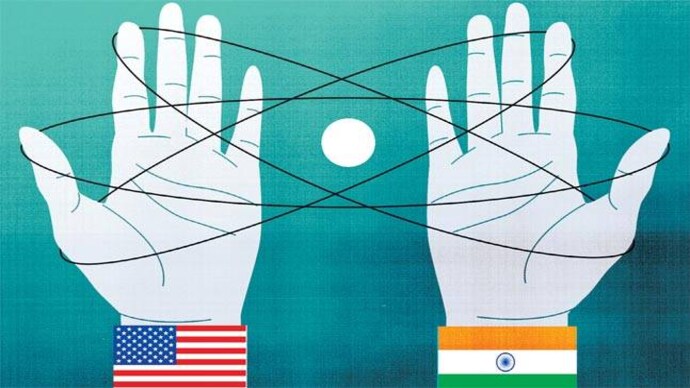
For much of the early twenty-first century, India cultivated a reputation as one of the most thoughtful practitioners of strategic autonomy in international affairs. It spoke with caution, moved with deliberation, and preserved room for maneuver in a world of competing power centers. That reputation—painfully built over decades—has come under unusual strain during the past ten years.
India’s foreign policy today faces questions about its clarity and credibility in ways rarely seen before. The problem is not simply external pressure from larger powers or the turbulence of global politics. It is the growing perception that New Delhi’s diplomacy has lost the disciplined balance that once defined it. The country still speaks the language of great-power ambition, but its strategic posture often appears reactive rather than purposeful.
The gap between aspiration and perception has become visible across major capitals. Washington’s engagement with India has grown more transactional. Moscow’s Eurasian diplomacy increasingly unfolds without Indian participation. Beijing continues to constrain India’s regional influence while expanding its own institutional reach across Asia and Africa. India seeks to remain present in every major geopolitical conversation, yet too often finds itself explaining its position rather than shaping the agenda.
This erosion of stature is particularly striking because India’s economic fundamentals remain modest relative to its geopolitical ambitions. The country has achieved impressive growth and technological dynamism, yet it is still a developing economy confronting deep domestic challenges. For decades India compensated for these structural constraints with intellectual clarity and diplomatic finesse. When that clarity fades, the gap between capability and ambition becomes harder to disguise.
None of this diminishes India’s long-term potential. But it does underscore an uncomfortable truth: the past decade has left the coherence of Indian foreign policy more open to question than at any time since the Cold War.
Ironically, the intellectual foundations for a more confident strategy already exist. The strategist C. Raja Mohan captured the essence of India’s post-Cold War transition in Crossing the Rubicon. He argued that New Delhi needed to abandon rigid ideological alignments and engage pragmatically with multiple centers of power while preserving freedom of action.
Later, the former national security adviser Shivshankar Menon refined this approach. In Choices and India and Asian Geopolitics, he described strategic autonomy not as passive neutrality but as an active balancing act—maintaining partnerships without surrendering independence and reshaping international institutions without seeking to overturn them.
Together these ideas formed one of the most sophisticated strategic traditions to emerge from the developing world. Yet practice has gradually drifted from theory. Concepts such as the Indo-Pacific, initially designed as flexible geopolitical frameworks, increasingly carry expectations of alignment. Security partnerships have expanded faster than domestic technological capacity. And during global crises—from tensions in the Taiwan Strait to conflicts in West Asia—India’s diplomatic voice has often sounded cautious when leadership was expected.
The consequence is a country that once prided itself on strategic independence but is increasingly perceived as navigating between stronger poles rather than defining one of its own.
History offers a useful reminder that such perceptions can change rapidly when a state identifies the right sources of influence. Consider the experience of Israel. Small in population and lacking strategic depth, Israel nonetheless constructed extraordinary global leverage over several decades. It achieved this not through size but through specialization: building technological capabilities, intelligence networks, and innovation ecosystems that powerful allies came to depend upon.
Even today, despite intense criticism of policies associated with Prime Minister Benjamin Netanyahu, Israel retains remarkable influence in Washington and beyond. The lesson is not that India should replicate Israel’s methods or posture. It is that durable international weight arises when other nations rely on capabilities you uniquely provide.
India has the scale to build such influence without the vulnerabilities that shaped Israel’s strategy. What it requires is a deliberate effort to translate its demographic size, technological talent, and democratic legitimacy into forms of leadership that others actively seek.
The opportunity is therefore not merely to repair India’s diplomatic reputation but to redefine its role in a changing international order. A framework for doing so might be described as the Benign Vanguard Doctrine—a strategy of autonomous leadership that positions India as the most trusted provider of public goods across the developing world while preserving freedom of action among competing major powers.
The premise is straightforward. In an era defined less by rigid alliances than by technological ecosystems and institutional networks, influence flows increasingly from the ability to supply platforms and solutions that others adopt voluntarily. Nations gravitate toward partners who expand their agency rather than constrain it.
Four operational pillars could translate that principle into practice.
First, digital governance as a global public good. India has demonstrated that large-scale digital systems can expand financial inclusion, improve welfare delivery, and modernize governance at national scale. By transforming these systems into open and internationally deployable platforms—supported by training institutions, technical assistance, and interoperable standards—India could offer developing nations a credible alternative to both surveillance-oriented technological architectures and monopolistic private platforms.
Countries adopting such systems would gain sovereignty over their own digital infrastructure. India, in turn, would gain something more enduring than revenue: a community of states whose technological frameworks naturally align with its own.
Second, climate transition as leadership currency. The global shift toward sustainable energy will shape development trajectories for decades. India already enjoys credibility among emerging economies because it confronts similar developmental constraints. By expanding cooperative initiatives in solar energy, green hydrogen, climate-resilient agriculture, and financing for vulnerable states, New Delhi can position itself as the principal convener of climate solutions across the Global South.
This role would make India indispensable to both advanced economies seeking legitimacy for climate initiatives and developing countries seeking workable technological pathways.
Third, institutional leadership for the Global South. The architecture of global governance still reflects the power distribution of 1945. Reform has stalled largely because major powers cannot secure the trust of smaller states. India occupies a unique position: large enough to influence the system yet historically aligned with the concerns of developing nations.
By institutionalizing platforms that amplify Southern voices and advancing practical reforms in areas such as development finance, artificial-intelligence governance, and trade rules, India can emerge as the diplomatic organizer of the Global South. Such leadership would also reinforce its longstanding claim to permanent membership in the United Nations Security Council.
Fourth, maritime and regional public goods. India’s geography places it at the center of the Indian Ocean, one of the most consequential strategic corridors of the twenty-first century. Expanding humanitarian assistance missions, disaster-response capabilities, anti-piracy patrols, and sustainable infrastructure partnerships across littoral states would steadily establish India as the region’s most dependable security partner.
Crucially, these efforts must remain visibly cooperative rather than coercive. The aim is not dominance but reliability—a reputation for assistance that strengthens trust over time.
None of these ambitions can succeed without strengthening domestic capabilities. India must deepen its technological base, invest in advanced manufacturing and research, and reduce structural dependencies that limit strategic choice. Autonomy abroad ultimately rests on capacity at home.
If pursued with consistency, such a strategy could gradually transform how the world engages with India. For Western democracies, a confident India coordinating development initiatives across the Global South would provide a credible partner for addressing global challenges. For China, India’s growing influence within emerging economies would make engagement unavoidable. For other middle powers, India could become a stabilizing interlocutor in an increasingly fragmented international system.
Most importantly, developing nations would see in India a partner whose rise expands their own options rather than narrowing them.
The past decade may have raised questions about the direction of Indian diplomacy. Yet it has also clarified the stakes. The world is entering a period in which leadership will belong not only to the strongest states but to those capable of building networks of cooperation that others willingly join.
India possesses the scale, institutional memory, and intellectual tradition to play that role. The challenge now is to restore the clarity that once defined its foreign policy—and to transform renewed credibility into constructive global leadership.
The opportunity is still there. The question is whether India chooses to seize it.
(Satish Jha, formerly an Editor with the Indian Express and The Times of India Groups of Newspapers, studied International Relations at The Fletcher School of Law & Diplomacy and was a Ford Fellow in Foreign Policy at the University of Maryland)