When the United States released its 2025 National Security Strategy last month, it did more than outline Washington’s priorities—it announced, with unusual candor, the terms on which power will be recognized in the coming decade.
The document rejects the post–Cold War fantasy of universal leadership and replaces it with something colder and clearer: America will trade selectively, defend its interests narrowly, and value partners not for affinity or symbolism but for what they tangibly contribute. For India, this recalibration arrives at an awkward moment.
Washington today does not ask who you are, or even what you believe. It asks what you deliver.
India enters this period larger, louder, and more visible than at any point since independence. Yet visibility has not translated into commensurate respect. In diplomatic corridors across Washington, Brussels, and Tokyo, India is increasingly spoken of as a country that wants to matter more than it is prepared to act. Its size commands attention; its conduct invites skepticism.
This matters because the United States has fundamentally reordered its approach to the world. The new strategy is blunt: America will no longer subsidize partners who consume security without contributing to it, enjoy market access without reciprocity, or demand strategic consideration without assuming strategic risk. Allies are now valued not for shared rhetoric, but for demonstrated utility.
India sits awkwardly in this framework. It is courted, but not trusted; welcomed, but not relied upon; praised in public, discounted in private.
The problem is not that India is insufficiently aligned with the United States. It is that India remains insufficiently committed to anything beyond its own rhetorical autonomy.
Strategic ambiguity once bought flexibility. Today, it signals indecision. In a world reverting to balance-of-power politics, ambiguity is no longer interpreted as sophistication; it is read as evasiveness.
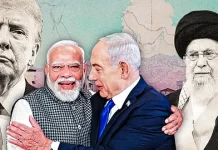
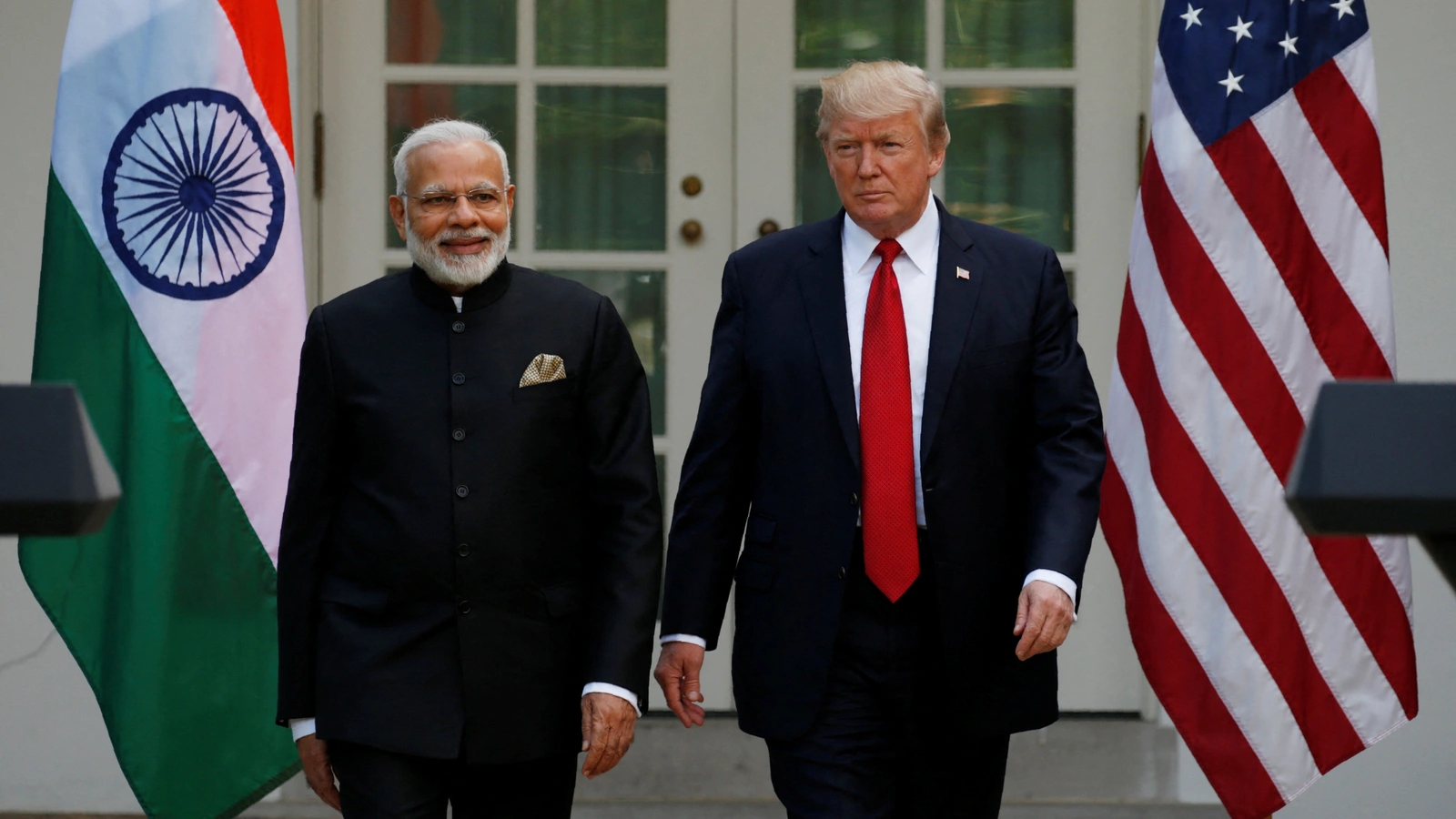
This perception has been sharpened, not softened, by the Modi government’s foreign-policy style. Over the past decade, India has tried to perfect the theater of diplomacy while neglecting its architecture. Prime Minister Narendra Modi is omnipresent on the global stage—lavishly photographed, endlessly embraced, relentlessly visible. Yet beneath the choreography, India’s substantive diplomatic gains are thinner than the imagery suggests.
Among Western elites, Modi’s hyper-personalized diplomacy—what is privately dismissed as “hug-plomacy”—is indulged for the cameras and quietly mocked offstage. Leaders play along because India is too large to ignore, not because it has become indispensable. Familiarity, in this case, has bred not influence but condescension.
Worse, India’s global reputation has deteriorated in ways that directly undermine its strategic ambitions. Once viewed as a pluralistic counterweight to China, India is now increasingly discussed—fairly or not—as inward-looking, majoritarian, and hostile to dissent. Allegations of bigotry, democratic backsliding, and ethnic nationalism have become embedded in Western policy discourse. These perceptions do not merely bruise India’s image; they shape its strategic valuation.
In the American worldview now ascendant, competence, merit, institutional credibility, and social cohesion are core components of national power. A country seen as internally brittle, ideologically rigid, or culturally exclusionary is viewed as a risk, not an asset. India’s domestic politics are no longer treated as a sovereign matter irrelevant to geopolitics; they are increasingly seen as a constraint on India’s reliability as a long-term partner.
This reputational slide compounds India’s deeper strategic problem: its persistent reluctance to convert partnership into participation. The United States does not expect India to become a treaty ally. But it does expect consistency—on supply chains, defense interoperability, export controls, and regional deterrence. What it encounters instead is selective engagement and habitual hedging.
India wants access to American technology without American standards, American markets without American expectations, and American strategic backing without American entanglements. This posture may feel sovereign in New Delhi. In Washington, it reads as free-riding.
The new American strategy is unforgiving on this point. Burden-sharing is no longer a NATO-specific demand; it is the organizing principle of U.S. foreign policy. Countries that cannot—or will not—anchor security in their own regions, absorb economic risk, or align industrial capacity with strategic goals will not be punished. They will simply be bypassed.
That is the real danger for India. Not containment, not confrontation, but quiet marginalization.
India’s internal growth story remains real. Its demographic momentum, digital public infrastructure, and entrepreneurial energy are formidable. But geopolitics rewards not potential, only conversion. Without deeper trade integration, defense co-production at scale, and visible regional leadership—from the Indian Ocean to Southeast Asia—India risks becoming a country that may grow impressively inward while remaining geopolitically peripheral.
Claims that the “American century” has ended miss the point. What has ended is America’s willingness to carry others indefinitely. The United States still dominates the pillars that matter: capital markets, reserve-currency status, technology standards, alliance networks, and military reach. What it has shed is sentimentality.
In that harder world, India’s current posture is insufficient. Moral lectures no longer substitute for material contribution. Civilizational rhetoric does not compensate for supply-chain opacity. Strategic silence does not equal strategic wisdom.
India’s challenge is not to choose sides, but to choose seriousness.
No
That means articulating a clear Indo-Pacific doctrine rather than performing episodic signaling. It means moving from arms procurement to defense-industrial integration. It means opening critical sectors decisively, not defensively. It means becoming a net provider of stability in its maritime neighborhood, not merely a commentator on it. And it means recognizing that technological standards—especially in artificial intelligence, advanced manufacturing, and data governance—are the true battlegrounds of relevance.
Most of all, it means understanding that sovereignty in the twenty-first century is not the absence of alignment, but the capacity to shape outcomes. Countries that insist on maximal freedom while avoiding maximal responsibility do not remain independent for long; they become optional.
India still has time. The United States has not written India off. But the window is narrowing, and patience is thinning.
The coming order will not be led by the loudest nation, the largest nation, or the most photographed one. It will be led by those who show up prepared, aligned, and willing to bear weight.
India must decide whether it wants to be admired for its potential—or respected for its power.