Santosh Bhartiya, Suresh Sharma, and Kumar Prashant will always be remembered in history as the first MISA detainees.
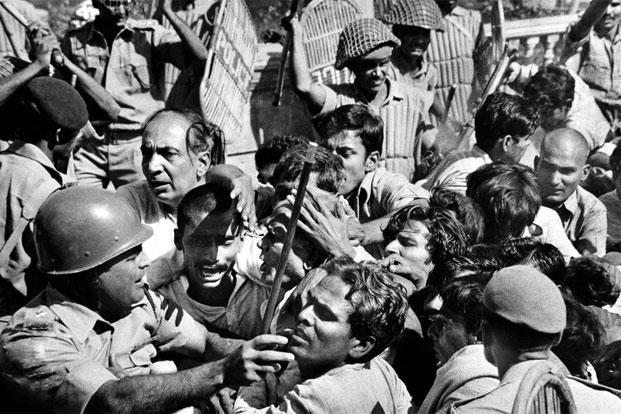
This account begins just before the Emergency period in India.
In Gujarat, students launched a protest movement that gradually evolved into a strong public uprising against the government. At that time, Gujarat was ruled by Chief Minister Chimanbhai Patel. Jayaprakash Narayan, the hero of the 1942 Quit India Movement and, by then, the second most prominent leader of the Sarvodaya movement and India’s most respected and accepted leader in the social and economic spheres, extended his support to the student protest. The student movement quickly transformed into a mass movement across Gujarat, organized under the banner of the Gujarat Navnirman Samiti—a student and youth-led initiative. The president of this group was student leader Manishi Jani. This event took place in 1973.
From Gujarat, Jayaprakash Ji traveled to Bihar. Inspired, students in Bihar also formed a committee named Chhatra Sangharsh Samiti (Student Struggle Committee). Its president was Lalu Prasad Yadav, and the general secretary was Narendra Singh. The committee also included all major student leaders of that time, such as Nitish Kumar. They sought to organize a student movement in Bihar and requested Jayaprakash Narayan to lead them.
In March 1974, in Muzaffarpur district of Bihar, a group of Sarvodaya-inspired youths under the name Tarun Shanti Sena launched a protest to set fixed prices for essential food items due to the extreme inflation at that time. They decided to hold a public meeting on 17th March 1974 at Company Bagh ground in Muzaffarpur, where prices for food items would be declared on behalf of the people.
A day before the scheduled meeting, members of Tarun Shanti Sena decided to inform the local Sadar police station. On 16th March, Santosh Bhartiya and Kumar Prashant, representing the group, went to the police station to give the information. Accompanying them was Kishore Shah, a socially conscious youth of Indian origin who had come from Kenya to study the Gujarat movement and later joined the Tarun Shanti Sena to observe their activities.

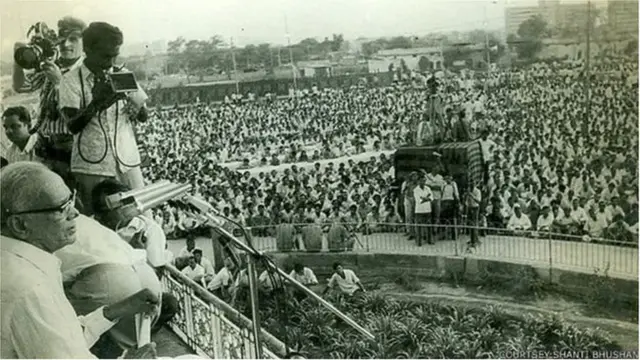
Jayprakash Narayan, Santosh Bhartiya & Kumar Prashant
The police, under the pretext of serving tea, detained Santosh Bhartiya and Kumar Prashant at the station, saying the SHO would arrive shortly to give permission. Kishore Shah arrived soon after, and a crowd of students waited outside. After being made to wait for about three hours, they were told that a police van was waiting outside, and they were under arrest. The three youths were placed in a barred vehicle meant for prisoners and sent to jail, accompanied by MISA papers (Maintenance of Internal Security Act). The district magistrate informed the Chief Minister of Bihar, Abdul Ghafoor, in Patna, who ordered their detention under MISA.
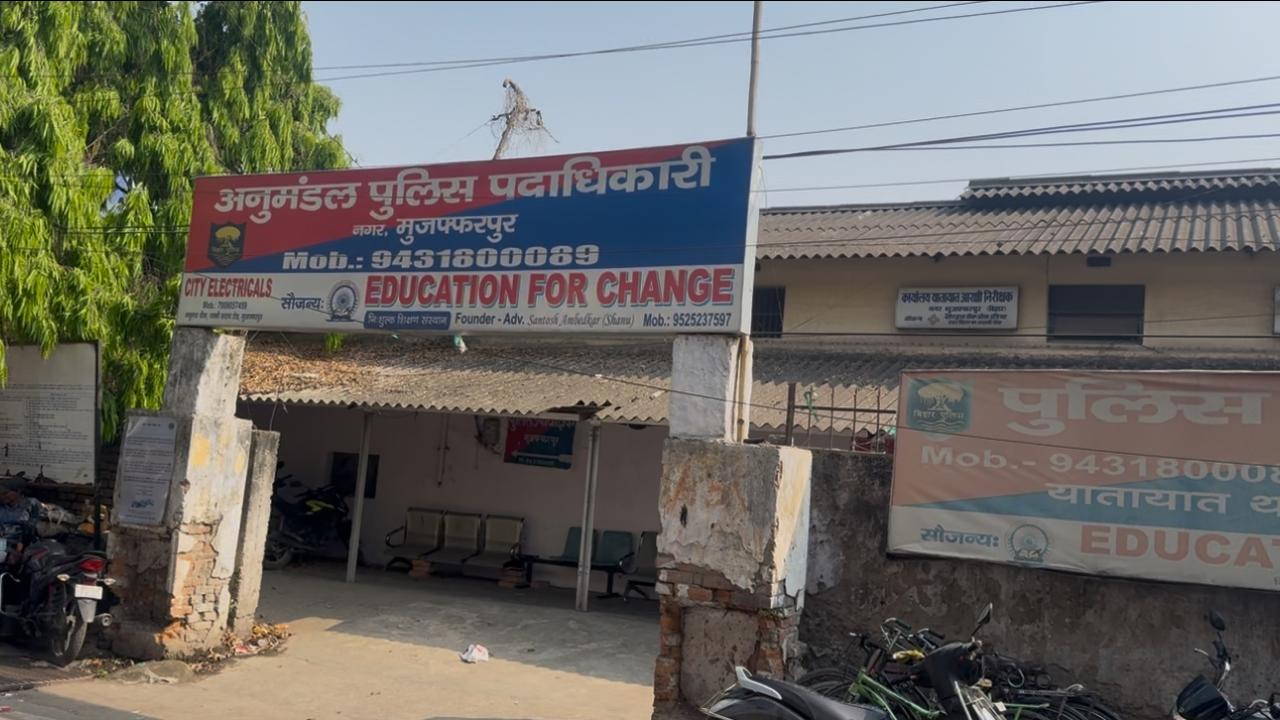
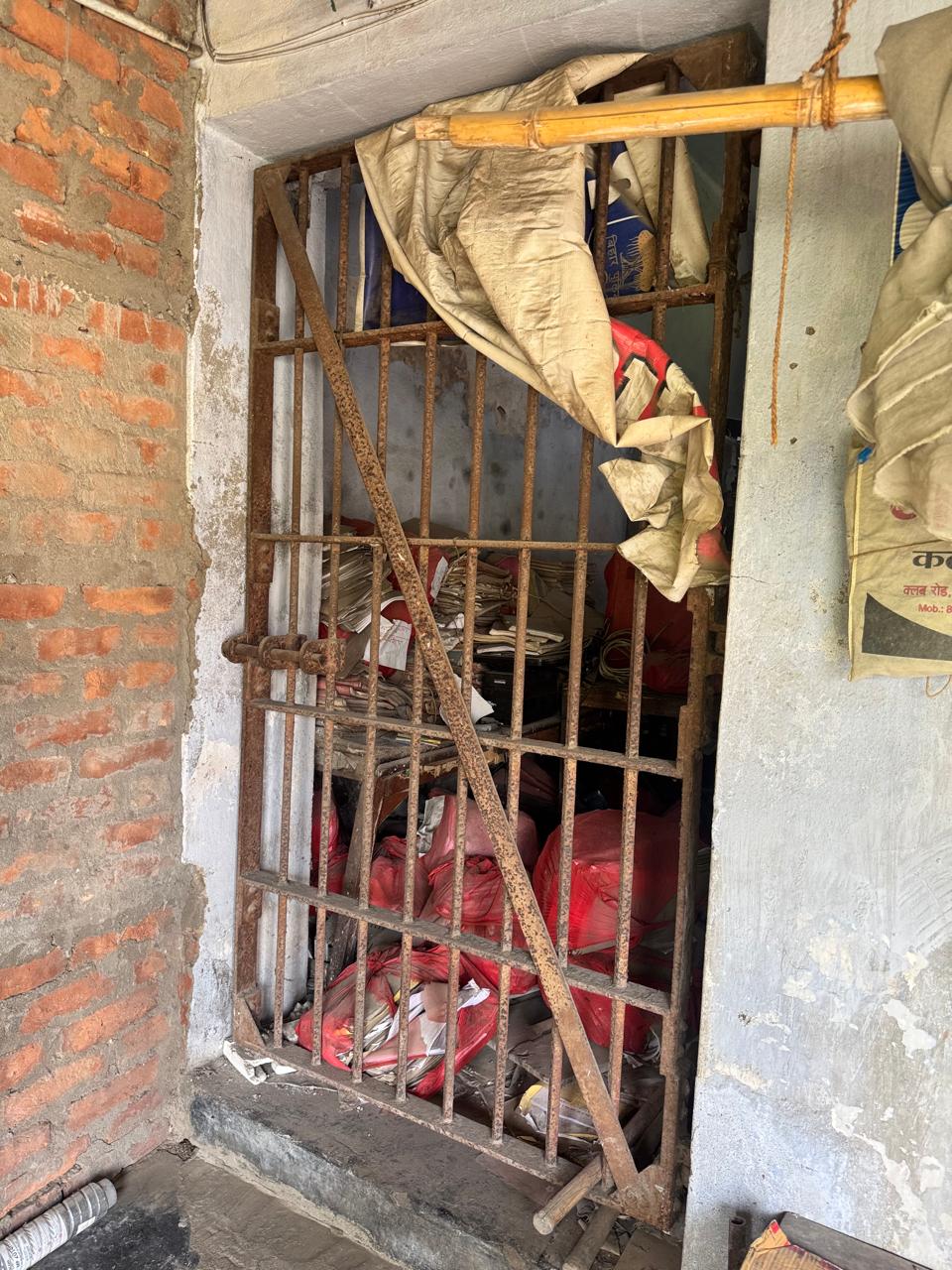
These three young men thus became MISA detainees on 16th March 1974, at 5:30 PM. Their journey ended at Muzaffarpur Jail at 6:30 PM.
On the morning of 18th March, a prisoner informed Santosh Bhartiya that a severely injured student leader had been brought in the previous night and was admitted to the jail hospital. Santosh Bhartiya went to see him early that morning.
 The name of that young student leader was Suresh Vatsyayan, who told Santosh that he had gone to Company Bagh on 17th March, where he found out about the arrest of Santosh Bhartiya and Kumar Prashant. Suresh had obtained a leaflet prepared by Tarun Shanti Sena that was to be distributed during the meeting. He went to the center of the ground and read aloud the leaflet, which contained details of the proposed food prices. The police arrested him and took him to the local police station.
At the station’s gate stood the Superintendent of Police. In his presence, a CRPF jawan grabbed Suresh and brought him forward. The SP took the helmet of the jawan and hit Suresh hard on the head. Suresh recounted, “My head burst open. No one gave me first aid. I tried to stop the bleeding with a handkerchief, but the blood soaked my entire body.” He was bandaged only after arriving at the jail that night.
This same young man is today known as Suresh Sharma, a renowned journalist and former editor of Sandhya Times, who has also edited several books. He, too, was brought to jail under MISA.
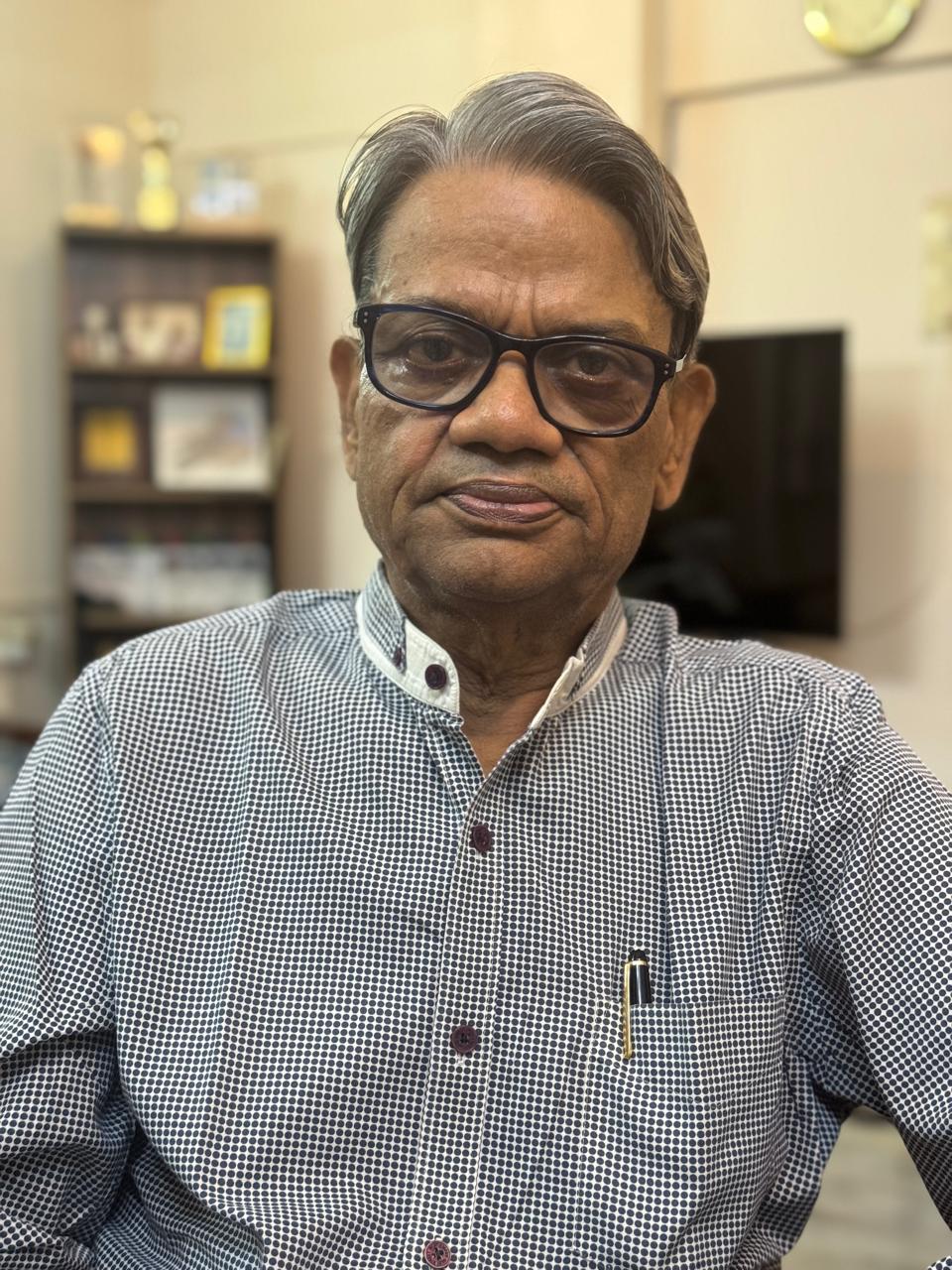 A week later, Jayaprakash Narayan wrote an article in the Searchlight newspaper, addressing the Chief Minister Abdul Ghafoor. In the article, he said:
“The boys you have arrested under the pretext of disturbing law and order can actually teach you how to maintain law and order.”
JP’s direct mention of their names in the article conveyed his calm yet resolute anger to the ruling establishment in Bihar and Delhi.
A few days after the article was published, the Bihar government withdrew the MISA charges against all four youths and released them from jail. Jayaprakash Ji immediately summoned them to Patna and learned the full details of the incident. He praised their price control campaign and encouraged their activism.
The Student Struggle Committee had earlier requested Jayaprakash Ji to become their patron, but he hadn’t responded. After speaking with the four young men, it appears he felt compelled to accept their call. He then called for a meeting of the committee at his home and laid down conditions:
- The movement must remain peaceful
- It must be non-violent
- It must remain against the system, not individuals
The committee accepted all his conditions.
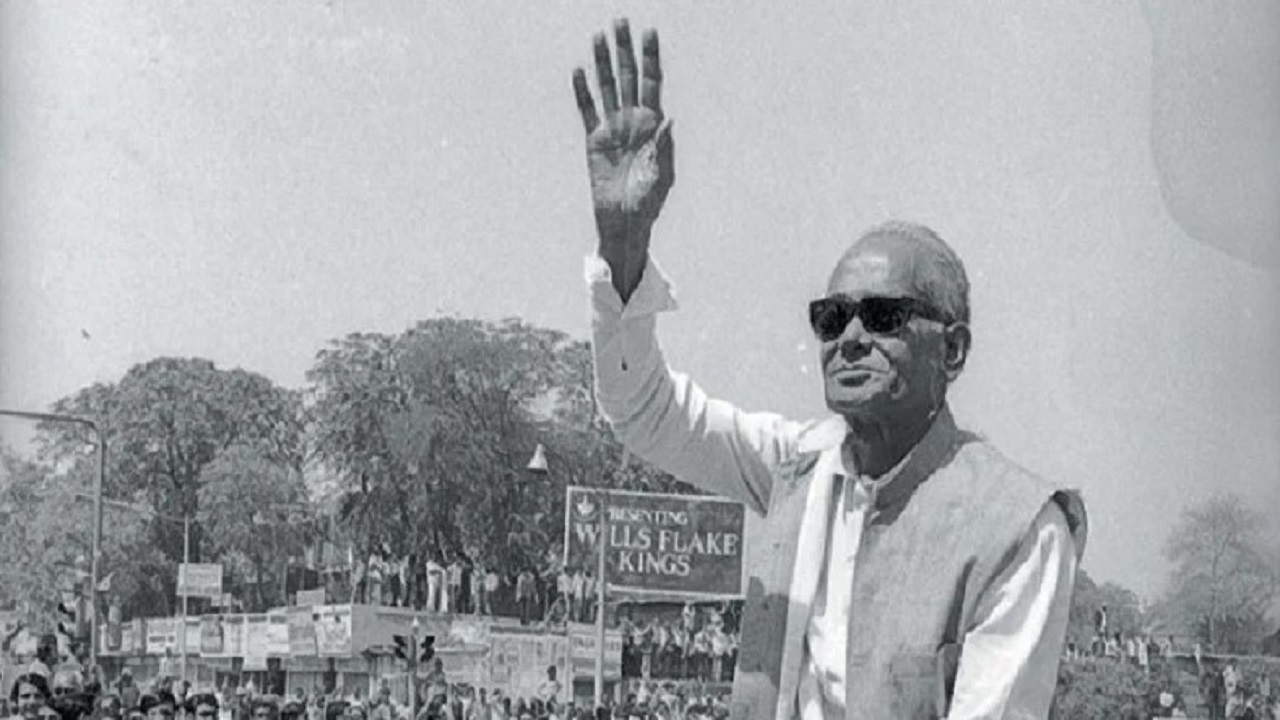 Thus began the Bihar Student Movement, with Jayaprakash Narayan as its leader.
In a massive rally at Gandhi Maidan, students honored him with the title “Loknayak” (People’s Leader)—a title that resonated across the nation and world. From that day, slogans like:
- “Hamla chahe jaisa hoga, haath hamara nahi uthega”
- “Har zor-zulm ki takkar mein, sangharsh hamara naara hai, bhaavi itihaas hamara hai”
became the voice of the youth.
Soon, the song “Jayaprakash ka bigul baja to jaag uthi tarunai hai” written by Ramgopal Dixit became the anthem of the movement.
“Who will walk today to erase corruption from this land?
Who dares to face tyranny and challenge the state?
See today who has wedded death itself…”
The song was on the lips of every young man and became the national song of the Bihar movement. It was coordinated closely by Omprakash Deepak and Shivanand Tiwari, who stayed in constant touch with JP.
 Kumar Prashant began living with Jayaprakash Ji, managing ideological publications and giving structure to the movement’s thoughts. Today, he is one of the leading interpreters of Gandhian and JP philosophies and heads the Gandhi Peace Foundation.
Kishore Shah continued traveling to study movements across India, and today no one knows his whereabouts.
Jayaprakash Ji formed a 14-member committee to spread the movement nationwide. Santosh Bhartiya was appointed as a member and was also entrusted as a special envoy of JP, delivering trusted messages across various parts of the country.
When JP sent Santosh Bhartiya to Delhi, The Statesman ran the headline:
“JP Imagery in Delhi”
It was on JP’s instruction that Santosh Bhartiya entered journalism, working with Sunday, Telegraph, Newsline, and later becoming editor of Chauthi Duniya, India’s first Hindi news weekly. He later became a Member of Parliament. Currently, he serves as Editor of Chauthi Duniya and Loud India TV.
Suresh Sharma too pursued journalism and is now a senior editor in India.
This article is authored by Suresh Trivedi, who was himself imprisoned as a MISA detainee throughout the Emergency.