The Bhopal gas disaster has been narrated so often that it risks becoming abstract. Numbers replace names; outrage hardens into ritual. Yet for me, Bhopal is not only a story of industrial catastrophe. It is also a story of journalism—of how difficult it is to tell the truth before it becomes obvious, of how institutions hesitate even when they are founded to resist hesitation, and of how a single editorial decision can follow you across continents and decades.
There are, in fact, three stories here. The first is familiar. The second is less told. The third is personal, and for a long time, I hesitated to write it down. But perhaps the time for hesitation has passed.
India in the early 1980s was suspended between confidence and anxiety. The Emergency had ended, but its habits lingered. The Green Revolution had fed millions, but inequality was stark.
Multinational corporations were treated with a mixture of awe and resentment. They brought technology, foreign exchange, and jobs. They also brought opacity. The implicit social contract was simple: we will not ask too many questions if you help us modernize.
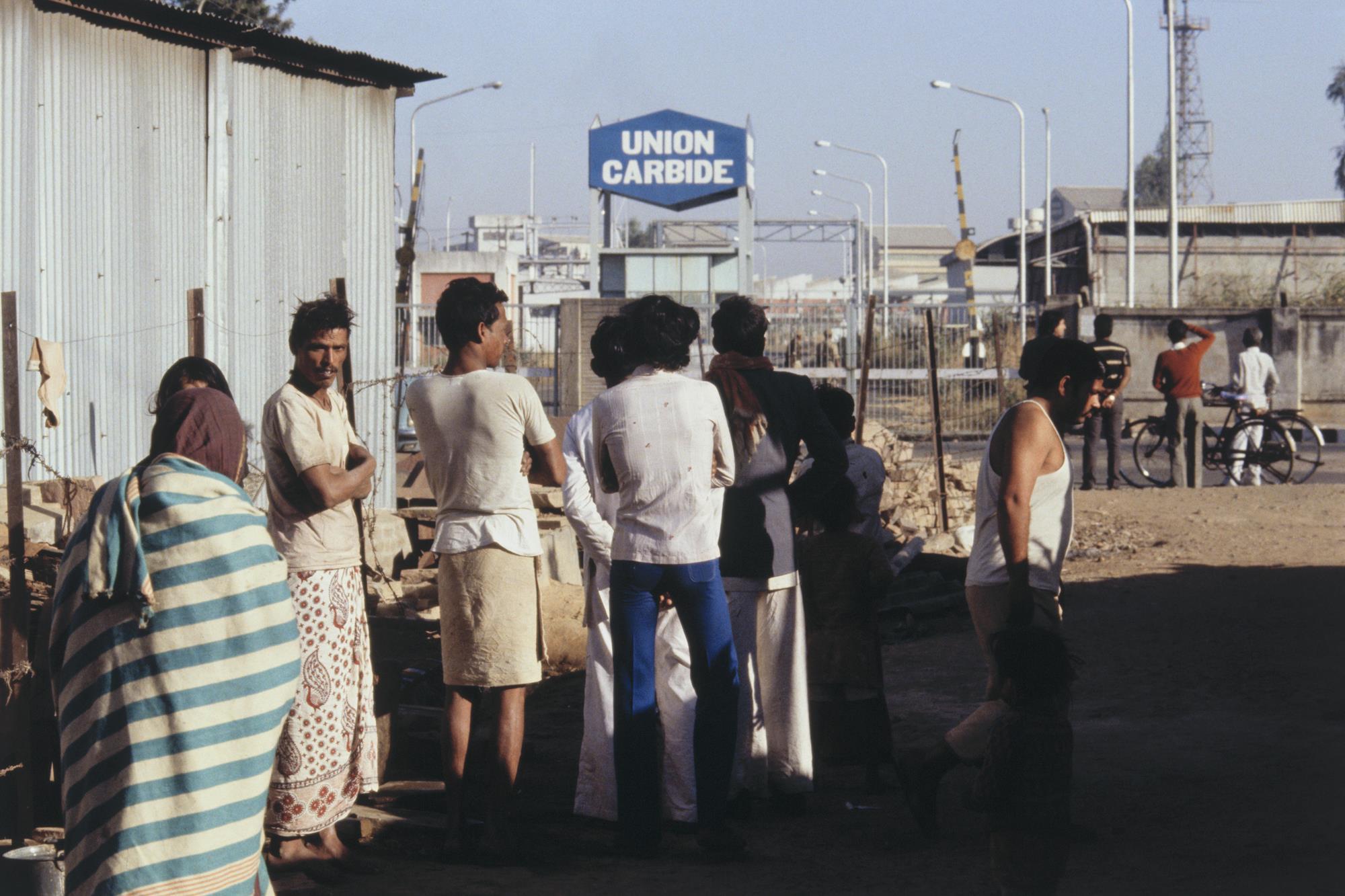
Union Carbide’s pesticide plant in Bhopal embodied this bargain. Established in 1969, it sat beside some of the city’s poorest neighborhoods. By the late 1970s, it stored large quantities of methyl isocyanate—MIC—a volatile chemical whose dangers were well known in industrial chemistry.
Safety systems degraded over time. Costs were cut. Skilled personnel left. Minor accidents occurred. Nothing about this was entirely secret. But nothing about it demanded attention either.
In December 1981, a gas leak killed a worker. In 1982, another incident injured several employees. Internal audits reportedly flagged serious risks. Yet the plant continued to operate as if normalcy were its strongest safety mechanism. The surrounding population—poor, politically weak, dispensable—absorbed the risk silently.
This is where the second story begins to surface. Rajkumar Keswani was not really a journalist. He did not have the protective armor of institutional prestige. What he had was stubbornness. After the early leaks, he began investigating Union Carbide’s operations. He spoke to workers, he knew someone who fed him the facts, he read technical documents, followed paper trails others found tedious.
Beginning in 1982, he published a series of articles in a small Bhopal-based pamphlet called Rapat. Their titles were unambiguous: “Bachaiye Bhopal ko bachaiye” (Save Bhopal), “Bhopal jwalamukhi ki kagar par” (Bhopal on the edge of a volcano). He warned, repeatedly, that a major accident was not just possible but likely.
The response was indifference.
Local newspapers dismissed him as sensational. National papers did not see a story. Editors are trained—almost by instinct—to separate facts from conjecture, event from possibility. Keswani’s pamphlets lived in an uncomfortable space: detailed but anticipatory, alarming but incomplete. It demanded imagination, not reaction.
And imagination, in journalism, is often treated with suspicion.
This is where my own story enters.
In late 1983, when Ramnath Goenka agreed to let me launch a Hindi newspaper, his instruction was characteristically blunt: “Angrezi ke liye Express hai. Hindi mein bhi wahi karna hai.” Make it serious. Make it fearless. Make it for readers who had intelligence but were denied respect.
That is how Jansatta was born.
The name itself was a minor battle. Having grien up in the shadies of Jaya Prakash Narayan, I asked for the bewspaoer to be named “Loksatta” but that was already taken by a Marathi paper of the Group. Then i asked for its synonym and everyone settled on “Jansatta”—the people’s power. It sounded slightly grand, slightly dangerous. I liked that.
The paper took off quickly. Readers responded to its tone—direct, unsentimental, serious without being pompous. We believed we were doing something different. And for the most part, we were.
But ideals do not eliminate hesitation. They only make its betrayal more painful.
In early 1984, Keswani walked into our newsroom and was eventually guided to my room. He was a bit stocky, earnest, carrying papers that looked more like evidence than copy. He had tried Delhi. He had tried Bombay. No one wanted his story.
I read his material. The chemistry checked out. The logic held. The danger was not exaggerated. But the writing was uneven. It needed shaping. More importantly, it needed conviction. I rewrote the piece.
The opening line still echoes in my mind: a simple statement that one day, residents of Bhopal may not wake up to the tragedy that struck them! It was not prophecy. It was probability.
And then something revealing happened. The article did not move.
It was aporoced by me so could not be not rejected. But it kept getting postponed. Informally there were murmurs: “Is this defensible?” “Is it speculative?” “Is it worth the risk?” These are reasonable questions. They are also how truth is quietly delayed.
One afternoon, Prabhash Joshi came over. He was not censorious; he was concerned. With that half-smile of his, he asked, “Bhaiya, mamla legal to nahin ho jayega?” (Brother, won’t this become a legal matter?)
I laughed—perhaps too quickly—and replied,
“Bhaisaheb, hum isliye thodi akhbar nikal rahe hain. Chemical equations theek hain.”
(Brother, we didn’t start a newspaper to play safe. The chemical equations are correct.)
It was a light exchange. But beneath it lay something heavier: the recognition that even a newspaper founded on dissent carries within it the habits of caution. The article finally appeared on June 16, 1984.
Nothing happened.
No inquiry. No outrage. No response from Union Carbide worth noting. The story entered print, but not public consciousness. It existed—and that, it seemed, was all it was allowed to do. Life, as it does, moved on.
That summer, something else happened. Rumors began circulating that I had been selected for the Hubert H. Humphrey Fellowship in the United States. It was usually reserved for civil servants—IAS, IPS, IFS. That year, the program had been quietly expanded to include me, as engaged in public service!
Ronu (Hiranmay) Karlekar, had recently removed from the Hindustan Times in one of Delhi’s many press-politics intrigues, began teasing me relentlessly.
“Koi ja raha hai lagta hai,” he would say. Someone’s going somewhere.
In September 1984, I left for the Fletcher School of Law and Diplomacy at Tufts University. From Delhi’s dust to New England’s manicured calm—it felt like another life. I audited courses compulsively, far more than required. International law. Ethics. Institutions. I did not know then how painfully relevant those abstractions would soon become.
One December morning, a professor approached me. He spoke gently, awkwardly.
“There’s been a terrible accident in a city near Bombay,” he said. “The name starts with B…”
I knew before he finished.
“Bhopal?” I asked.
The world narrowed.
Images flooded back—not of gas or bodies, but of that June article. The delay. The jokes. The quiet publication. The silence.
I called Abe Rosenthal at The New York Times, whom I had had heard of from my older fruends in Delhi and who was now the chief editor if the NYT. I told him there had been warnings. I gave him names. Numbers. Context. History, once again, moved faster than justice.
The disaster unfolded as we know it did. Thousands died. Many more were injured. Warren Anderson came, was arrested, released, and left. Legal battles dragged on. Compensation disappointed. Cleanup stalled.
Keswani became known. Awards followed. Recognition came. But recognition after catastrophe is a thin consolation.
This is not a story about heroism. It is not even a story about failure in the usual sense. It is a story about how systems see.
Institutions are trained to respond to facts, not futures. They reward caution, not imagination. They treat legality as ethics and silence as neutrality. Even dissenting institutions absorb these habits over time.
The Bhopal warning failed not because it was wrong, but because it asked too much too early.
This is why the story of how the tragedy was foretold matters. Not as an act of self-congratulation, but as a mirror. It asks whether we are capable—today—of hearing warnings that do not yet have victims to authenticate them.
Ink can tell the truth. But only values can act on it. That is Bhopal’s enduring lesson!