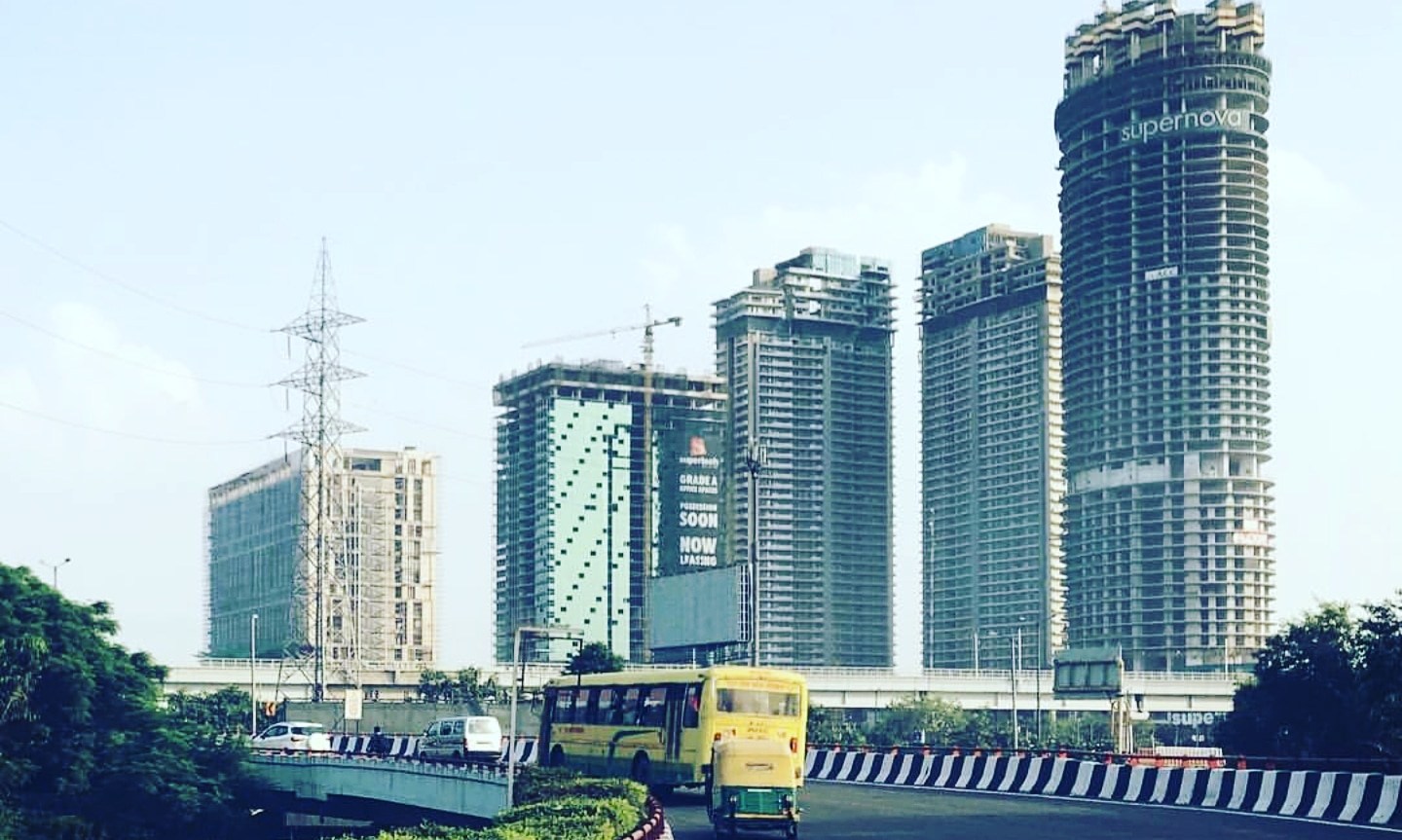
Back in 2009–2011, Supertech Ltd painted a dazzling picture of homeownership for tens of thousands of families across Noida, Greater Noida, Gurugram, Meerut, Rudrapur, and Bengaluru. Their glossy brochures promised “dream” townships— modern homes ready by 2013–15. For middle-class families, it felt like a golden opportunity: book early, pay through EMIs, and watch your future home take shape. But those dreams crumbled. What began as hope has turned into one of India’s most agonizing real estate sagas, with 16 projects stalled and nearly 50,000 homes still undelivered.
From Hope to Halt
By 2016, construction sites fell eerily silent. Cranes stopped moving, and promises faded. In March 2022, the National Company Law Tribunal (NCLT) declared Supertech insolvent after a ₹431 crore default to Union Bank of India, triggering Corporate Insolvency Resolution Proceedings (CIRP). But only one project, Eco Village-II, was admitted in formal insolvency. The other 15 projects remained in limbo, technically under Supertech’s control but effectively abandoned. Hitesh Goel, the Interim Resolution Professional for Eco Village-II, was tasked with overseeing the process, but buyers accused him of dragging his feet, shielding the developer while their suffering grew. Goel denied these claims in tribunal filings.
A Glimmer of Hope
with frustration mounted, buyers flooded the courts with petitions. Honourable Supreme Court ordered the National Company Law Appellate Tribunal (NCLAT) to explore solutions. After extensive hearing from the stakeholders, the NCLAT delivered on December 12, 2024, what buyers called a “historic” ruling: NBCC, a public-sector giant with a track record of rescuing stalled projects, would take over all 16 projects, representing 49,748 homes, at a cost of ₹9,500 crore. Work was set to start in May 2025. Social media buzzed with optimism—families rejoiced as they began imagining their promised homes, some even picking out curtains.
A Legal Twist and New Doubts
The homebuyers’ euphoria proved just short-lived. Supertech and its co-developer Apex Group challenged the NCLAT’s decision in the Supreme Court, arguing it bypassed proper insolvency procedures. On February 21, 2025, Supreme Court stayed NCLAT order that granted 16 Supertech stalled projects to NBCC for completion commencing from May 2025. Apex Group’s proposal, cleared by the Noida Authority to co-develop four projects, offered ₹2,578 crore to settle dues and an initial ₹500 crore investment. But homebuyers are deeply worried. Unlike NBCC, Apex lacks experience in large-scale rescues, and many see it too close to Supertech—the company that had already betrayed them. On May 9, 2025, Justice Suryaprakash gave all parties four weeks to submit fresh proposals, setting August 13, 2025, for the next hearing. Until then, NBCC’s plans are on hold, leaving buyers in limbo once again.
Dark Clouds of Mistrust
The saddest part in this saga is that Supertech’s founder, R.K. Arora, faces mounting accusations of fraud, cheating and betrayal of homebuyers. The Enforcement Directorate (ED), Central Bureau of Investigation (CBI), and furious homebuyers have pointed fingers at him for allegedly siphoning off funds meant for their homes. On June 14, 2025, the CBI filed a new FIR, accusing Arora of a ₹126 crore bank fraud. The Supreme Court has also ordered a CBI-monitored investigation into a suspected nexus between builders, banks, and authorities, fueling buyers’ growing distrust in a system that seems to have abandoned them. A report from Interim Resolution Professional Hitesh Goel reportedly revealed that Arora diverted a staggering ₹9,500 crore from Supertech projects. Homebuyers’ associations are now clamoring for a forensic audit, convinced that these alleged fund diversions are the root cause of their shattered dreams and the collapse of these housing projects.
Families Caught in the Crossfire
Behind every court filing are 49,748 families teetering on the edge. Many are juggling rent for their current homes while paying EMIs for flats that exist only on paper. Those who booked homes in their 20s are now in their 40s, watching their children grow up in rented spaces while their dream of homeownership slips away. Retirement savings have vanished for some; others have sold family heirlooms or canceled medical insurance to keep loans from defaulting. Banks, meanwhile, seem to protect the developer while pressuring buyers. “I paid the full principal on my zero-interest loan, but I have no home, no refund,” says Akash Goel, a petitioner from Eco Village 3. “How long can we keep waiting?” The toll is more than financial—mental health counselors report rising cases of depression and even suicidal thoughts among buyers. Some have drafted petitions to the Supreme Court, expressing unbearable pain, though they’ve not yet filed them.
What Justice Means to Them
For these families, justice isn’t an abstract concept—it’s practical and urgent. They want:
• A concrete plan, free from endless legal battles.
• Clear timelines backed by transparent escrow accounts to ensure funds go to construction.
• Accountability for diverted funds, with criminal prosecution and financial recovery where possible.
• A voice in every decision that shapes their future.
NBCC’s success in cases like Amrapali gives buyers confidence, but Apex’s bid feels like a thousand steps backward, tied to the same promoter-driven failures they’ve endured. The Supreme Court’s ruling on August 13, 2025, will be pivotal. Every delay risks higher costs, unsafe buildings, and more broken dreams. Holding On, barely fifteen years ago, Supertech sold “lifetime addresses.” Today, buyers jokingly call their booking receipts family heirlooms, passed down with fading hope. Yet they persist—attending every court hearing, refreshing tribunal websites, and rallying on social media. They’re not driven by faith in the system but by a desperate need to secure their children’s future. On 13 August 2025, over 50,000 homebuyers will watch the Supreme Court decide between a state-led rescue by NBCC, Apex’s private bid, or a hybrid solution. If this moment slips away, these families risk losing not just their savings but the very dreams they’ve clung to for over a decade. For them, it’s not just about a home—it’s about restoring trust, dignity, and the life they were promised.