Elections are not won; they are engineered. Bihar 2025 was the proof.
The counting screens flickered past midnight, and the numbers defied belief. Bihar is a state where unemployment grips nearly half of its youth, where the Kosi’s floodwaters still threaten homes, and where migrant workers return from Delhi with empty wallets and broken bodies. Yet this same state delivered an NDA landslide that looked like a coronation, not a contest.
One exit poll projected 243 seats for the NDA. The final numbers were almost as stunning: 202 seats out of 243. BJP claimed 89, JD(U) 85, and allies—including Chirag Paswan’s LJP(RV)—took 19. The Mahagathbandhan (MGB) fell to 35 seats, with RJD’s 25 the only flicker in an almost total rout.
The gap between the mood on the ground and the verdict is not a crack. It is a canyon. In that canyon lies the corpse of India’s electoral democracy—still warm, still twitching, but unmistakably dead.
Bihar 2025 was not an election. It was the controlled demolition of the idea that votes matter where the script was written in Delhi, not Patba.
The Special Intensive Revision (SIR) was introduced by the Election Commission as a security measure. It functioned as a surgical strike on the democratic nervous system instead. Voters were filtered with precision. Not urban elites. Not rural poor who vote as communities. But the precarious middle: small traders, contract teachers, migrants with smartphones but no safety net. Many of them found their names missing from voter lists. They vanished like entries erased from a ledger. Election Commission helplines offered no help. Courts, overwhelmed with “urgent mentions,” looked away. Now we know that when a voter list shrinks by algorithm, democracy dies by deletion.
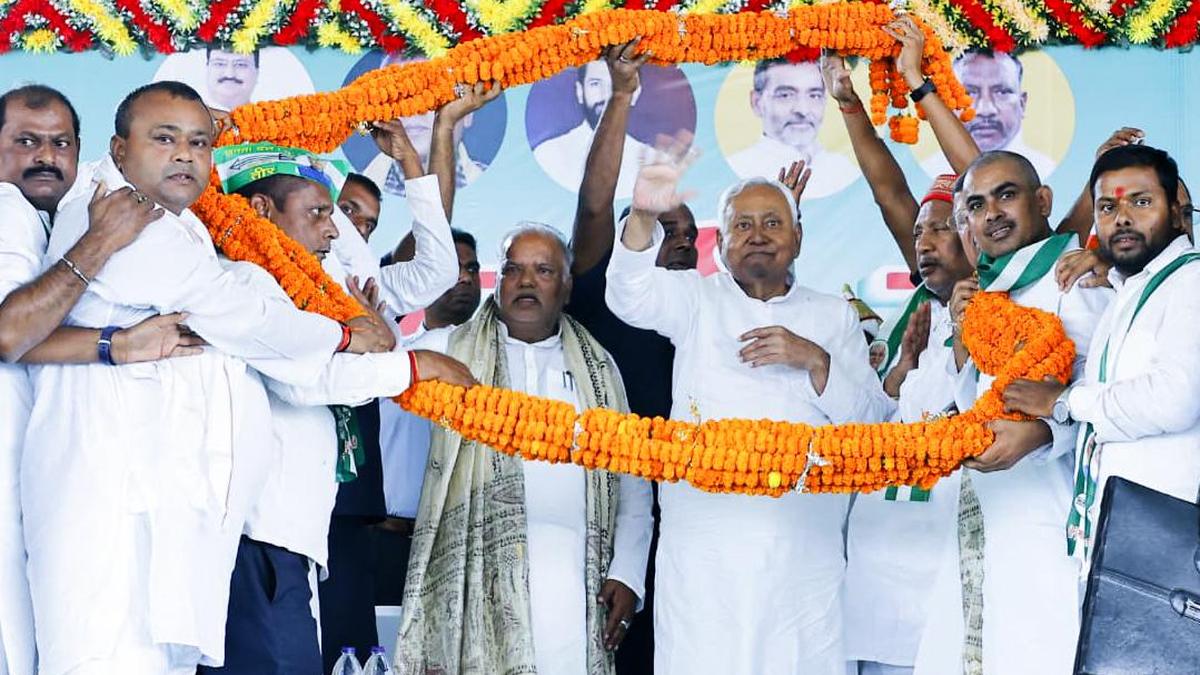
Then came money. Women across the state received ₹1,200 in their bank accounts the night before polling. It was not welfare. It was a digital bribe. The Prime Minister, who should be constitutionally restricted from shaping state elections, campaigned like a headliner. The crowds did not matter. The camera angles did.
The Lal Quila blast, timed with uncanny precision and lacking any real resolution, completed the architecture of fear. Fear always boosts turnout where it matters and suppresses it where it hurts. Exit polls did not forecast the result. They simply affirmed it.
Prashant Kishor’s Jan Suraaj Party contested all 243 seats. It looked like a new force. It was a Trojan horse. It had spent three years building a youth-driven platform free of caste and dynastic politics. Early leads hinted at disruption. By midday, those leads disappeared. The party finished with zero seats. Yet its vote share mirrored the MGB’s 2.8-point dip from the Lok Sabha polls, bringing the opposition down to 37.3% in the assembly race.
Jan Suraaj cut into RJD’s strongholds just enough to bleed the MGB dry. It did not threaten the NDA. It softened the battlefield. Many margins were under 15,000 votes. In a first-past-the-post system, that is the difference between a wave and a wipeout. A third horse usually disrupts a race. Here, it pulled the winner’s chariot.
A popular explanation now circulates in political circles: that the NDA’s unprecedented victory was simply the product of BJP’s precise seat allocation and tight managerial discipline against a scattered and sloppy opposition. This view suggests that the NDA won not because of manipulation or structural advantages but because of superior planning.
This argument is flawed for three reasons.
First, no amount of seat allocation explains the sudden disappearance of targeted voters or the selective impact of SIR. Management does not delete names from lists.
Second, efficient strategy cannot turn a 37% vote share for the MGB into just 35 seats without a parallel mechanism of fragmentation. That mechanism was Jan Suraaj. Strategy can optimize a mandate. It cannot fabricate one.
Third, tight management does not explain last-minute welfare transfers, security-related disruptions, or the eerie convergence of exit polls on numbers that defied ground sentiment. These are not tactics. They are tools of control.
The “smart management” narrative is a convenient mask. It sanitizes a process that was neither free nor fair. It praises efficiency to hide engineering.
In other words the opposition did not lose Bihar. It was engineered to surrender it.
For years, the rules have been clear:
- Lose → Face ED raids.
- Win → Face Governor’s delays.
- Protest → Face sedition charges.
Yet the opposition responds with tweets and television sound bites. Rahul Gandhi wins affection but loses elections. He is a tragic hero in a script already written. Congress behaves like a viral message: loud, emotional, and irrelevant. It collapsed to six seats, pulling the RJD down with it.
The opposition is not naive. It is domesticated. It prefers symbolic resistance to structural confrontation. It holds press conferences instead of protests. It negotiates alliances that collapse at the first sign of ambition. It benefits from playing victim. The BJP gets power. The opposition gets pity. The voter gets nothing.
Every strong democracy depends on independent institutions. India’s institutions no longer compete with power; they comply with it.
The Election Commission speaks in silence. The CBI and ED chase the opposition, not corruption. Governors act as viceroys. Media outlets serve as cheerleaders or echo chambers. The judiciary is brave only in flashes and buried in delays. These institutions are not malfunctioning. They are simply obeying.
The result in Bihar shows this clearly. SIR deletions were approved. Trojan vote-splitting was ignored. Welfare was weaponized. The NDA’s 47.2% vote share bloomed into 202 seats, while the MGB’s 37.3% shrank to 35.
The NDA deserves recognition: 10/10 for strategy, 10/10 for crookedness. Its blueprint was ruthless and elegant. Welfare payments targeted women, producing a turnout of 71.6% among them—far higher than men. Chirag Paswan’s LJP(RV) played the loyal sidekick. Jan Suraaj sliced opposition votes with surgical precision. The NDA did not need half the state. It needed half the opposition.
Altogether, the chipoing away if Indusn demicracy has culminated in extraordinary annexation of Bihar’s governance by machinations that stymie everything india threw its colonial yoke for. It’s ckear now that India’s democracy cannot be saved by elections alone. It requires resistance. For starters, the oppisition may want to consider the following:
1. Boycott the CEC, Not the Election.
Opposition parties must sign a public declaration of no confidence in the Election Commission. Demand:
– consensus-based appointments, with a veto for the opposition leader;
– live-streamed shortlisting;
– a 10-year cooling-off period for retired bureaucrats.
2. Use Institutions that still breathe.
– File PILs on voter deletions and third-party funding.
– Flood RTI systems for SIR’s algorithmic design.
– Freeze parliamentary business until CEC reforms begin.
3. Build a parallel civi state
– Create a People’s Voter Registry on blockchain.
– Establish citizen-run shadow counting centers.
– Train unemployed youth as poll watchers.
4. Renew the Congress—or replace It.
The opposition needs a shadow cabinet, data-driven state war rooms, and open primaries for candidates. Congress must choose rebirth or exit.
5. Globalize the fight for free election.
– Petition UN Special Rapporteurs on electoral freedom.
– Share SIR’s architecture with international cybersecurity experts.
– Invite global observers to future state polls.
Bihar 2025 was not an election. It was a daylight robbery. The stolen good was sovereignty. The tools were algorithms, bribes, bombs, and a Trojan horse named Jan Suraaj. The accomplice was an opposition too timid to expose the robbery. In a democracy, with a vibrant opposition, when ballots are rigged, the street becomes the only ballot box left.
India stands at a threshold. One more “landslide” of this kind, and elections will join secularism and socialism in the preamble—present in text, absent in practice.
The opposition must choose: Will it sing in the chorus of a tragedy? Or will it ignite a democratic uprising?
Because the next election is already being written.
And unless India rewrites the script now, the ending will never change.