
In recent years, India has projected itself as a rising power in a rapidly changing global order. Its leaders have spoken of the country as a Vishwaguru—a civilisational teacher and moral guide for the world. India’s growing presence in forums like the G20, the Quad, and BRICS, alongside high-profile summits with the United States, Japan, and China, seems to reinforce this image. Yet behind the spectacle lies a more complicated reality: India’s foreign policy remains caught between expansive ambition abroad and fragile foundations at home.
For outsiders, this tension is crucial to grasp. India is now the world’s most populous nation, a nuclear power with one of the fastest-growing economies. It is courted by Washington as a counterweight to Beijing, admired by some in Europe as a potential partner in global governance, and wooed by developing nations as a voice of the Global South. But India’s capacity to translate these expectations into sustained influence is limited by deep structural weaknesses: uneven economic development, fragile infrastructure, political polarisation, and social tensions. These domestic constraints continually undercut its strategic aspirations.
Rhetoric vs. Capacity
The discourse of Vishwaguru resonates within India, but it obscures the realities of global power. International influence today rests less on civilisational self-image than on material capabilities: economic resilience, technological depth, and institutional strength.
This is not a new problem. At independence in 1947, Prime Minister Jawaharlal Nehru positioned India as a leader of the Non-Aligned Movement, seeking to carve autonomy between the Cold War blocs. Yet Nehru also invested heavily in science, industry, and education, recognising that moral authority without material capacity was insufficient. When war with China in 1962 exposed India’s vulnerabilities, that lesson was driven home.
The same paradox persists today. India aspires to global leadership but struggles with internal fragilities: crumbling urban infrastructure, limited manufacturing competitiveness, precarious employment for its youth, and a public culture often distracted by spectacle rather than substance. These weaknesses are not incidental—they shape the credibility of India’s diplomacy.
China: The Relentless Asymmetry
India’s relationship with China illustrates the point most starkly. Official rhetoric frames recent dialogue as pragmatic engagement, but the underlying asymmetry is widening. Beijing dictates the tempo in trade, technology, and border management; New Delhi responds reactively.
History again offers perspective. In 1988, Prime Minister Rajiv Gandhi reopened dialogue with Beijing after decades of estrangement, signalling pragmatism without illusions of parity. Today, however, parity is too often claimed rhetorically while China’s advantages in industrial scale, infrastructure, and innovation deepen the imbalance. Unless India builds economic and technological strength, its diplomacy with China will remain defensive, no matter how artful the negotiation.
The United States: A Natural but Uneasy Partner
If China exposes India’s vulnerabilities, the United States highlights its paradoxes. Washington views India as an indispensable partner in balancing China’s rise, and the Indo-Pacific strategy has positioned New Delhi as a central actor. The landmark U.S.–India civil nuclear agreement of 2005 was emblematic of how strategic alignment could reshape India’s global role.
Yet challenges persist. America’s own volatility—exemplified by the second Trump presidency—raises doubts about reliability. More importantly, India’s internal trajectory complicates the partnership. For all its imperfections, the U.S.–India relationship has long rested on shared democratic values. As India experiences democratic backsliding and deepening polarisation, the normative basis of trust weakens, even if strategic imperatives endure.
Atal Bihari Vajpayee, the prime minister who declared India and the United States “natural allies,” understood that durable alignment requires both interests and values. Today, India risks undermining that balance.
Multilateral Pageantry vs. Purpose
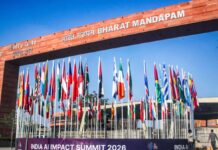
India is an active participant in an expanding array of international forums: the Quad with the United States, Japan, and Australia; BRICS with China and Russia; the Shanghai Cooperation Organisation (SCO) led by Beijing and Moscow; and the G20, where India hosted a summit in 2023.
But activity does not always translate into influence. In the Cold War era, the Non-Aligned Movement reflected a coherent Indian strategy: to maximise autonomy in a bipolar world. By contrast, contemporary participation often appears more performative than purposeful. High-profile summits generate visibility, but without clear institutional strategy, they rarely produce enduring gains. The danger is that India mistakes visibility for influence, becoming more of a supporting actor in a multipolar script written by others.
Domestic Renewal as Strategic Imperative
India’s past offers another lesson: breakthroughs in foreign policy have typically followed domestic renewal. The 1991 economic reforms under Prime Minister P.V. Narasimha Rao and Finance Minister Manmohan Singh paved the way for India’s reintegration into the global economy. Rao and Vajpayee’s pragmatic nuclear policy and embrace of the United States were anchored in growing domestic confidence. Singh’s nuclear deal with Washington consolidated India’s external stature precisely because it was backed by internal reform and growth.
The implication is clear: India cannot sustain external ambition without domestic transformation. To course-correct, three priorities are urgent:
De-personalise foreign policy. Diplomacy should not be reduced to electoral theatre or leader-centric performance. Institutional depth and continuity across political cycles are essential.
Invest in domestic capacity. Inclusive growth, industrial dynamism, educational reform, and technological innovation are not optional; they are the foundations of power. Social cohesion and democratic pluralism, too, matter—not only as ideals but as sources of legitimacy in global partnerships.
Recalibrate external posture with clarity. With China, India must engage realistically, not rhetorically. With the United States, it must deepen partnership while preserving agency. With multilateral forums, it should privilege purposeful engagement over spectacle.
Conclusion: Power Rooted in Renewal
India stands today where it has often found itself in the past: rich in aspiration, constrained by capacity. From Nehru’s non-alignment to Vajpayee’s nuclear tests and Singh’s U.S. Nuclear deal, the recurring lesson is that foreign policy ambition succeeds only when anchored in domestic renewal.
For international observers, the risk is misreading India’s performance on the global stage. The country is neither the confident great power its rhetoric suggests nor the fragile state its critics sometimes depict. It is instead a nation at a crossroads, where external ambition must be matched by internal reform.
The true test of Indian foreign policy is not the grandeur of its global summits but the seriousness of its domestic transformation. Without that renewal, India will remain perpetually outmanoeuvred—by rivals who exploit its weaknesses, by partners who doubt its reliability, and by a global order that evolves with or without its consent. With renewal, however, India could finally move from being shaped by the international system to shaping it on its terms.