A foreign‑policy flourish collides with the energy needs of 1.4 billion people.
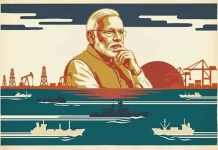
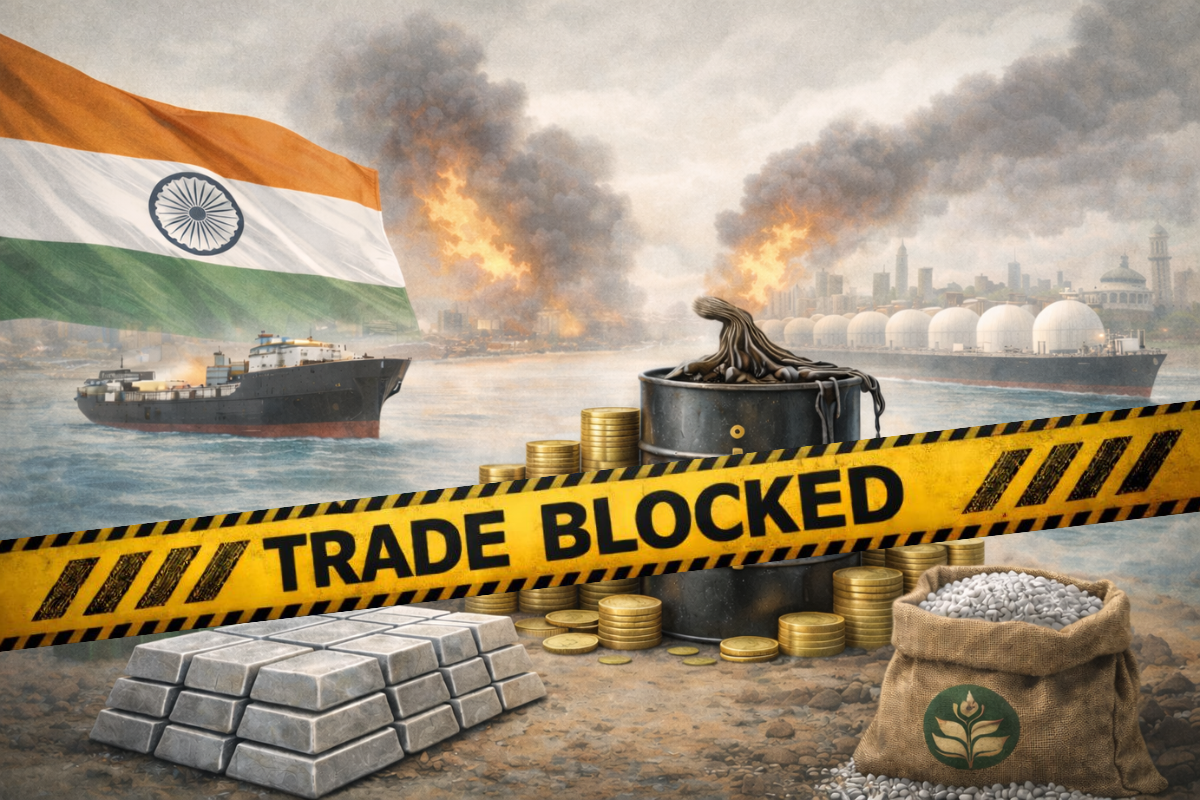
The Strait of Hormuz is bleeding. Iranian retaliation has slowed tanker traffic to a crawl, insurance premiums have spiked, and Brent crude is again threatening the $100 mark.
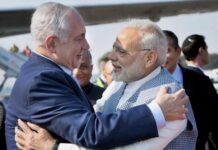
For India — the world’s third‑largest oil consumer — this is not distant geopolitics. It is a direct hit on the fuel that powers tractors in Punjab, buses in Bihar, and the kitchens of 1.4 billion people. And it comes just weeks after Prime Minister Narendra Modi stood in Israel’s Knesset, upgraded ties to a “Special Strategic Partnership,” and declared India stood “firmly” with Israel.
The timing was not unlucky. It was the predictable outcome of a decade‑long tilt that traded strategic autonomy for niche defense technologies. India chose drones and surveillance systems prized by its urban elites over the oil lifeline its masses cannot live without. That choice now looks less like strategic boldness and more like a profound miscalculation.
India imports nearly 89 percent of its crude — about 5.8 million barrels a day. Policymakers long touted diversification, and Russia’s discounted Urals did cushion the shock after 2022. Yet in early 2026, as Washington pressed for alignment, New Delhi quietly cut Russian volumes. Gulf suppliers — Iraq, Saudi Arabia, the UAE, Kuwait — again made up more than half of India’s basket, almost all of it flowing through the Hormuz chokepoint. When the U.S.–Israel strike killed Iran’s leadership on February 28, India found itself more exposed than at any time since the 1973 oil crisis.
The human stakes are even larger. Nine to ten million Indian expatriates live in the Gulf — the biggest such diaspora anywhere — and their remittances dwarf India’s trade with Israel. Their safety and livelihoods depend on stable Arab monarchies, not on Israeli defense hardware. Yet the optics of Modi’s Knesset address suggested a different hierarchy of priorities. Across the Global South, where India once claimed moral leadership, the speech landed as a rupture.
This is not about ideology. It is about arithmetic. Bilateral trade with Israel hovers around $5 billion; defense deals signed during Modi’s visit reportedly reached $8.6–10 billion. Useful, yes — Heron drones and Barak missiles have tactical value against Pakistan and China. They also gratify the upwardly mobile 100 million Indians who consume English‑language news and cheer muscular postures. But for a nation of 1.4 billion, these are luxuries, not lifelines.
The asymmetry is stark. Every $1 rise in crude adds roughly $2 billion to India’s annual import bill. Prolonged disruption in Hormuz threatens inflation, a weakening rupee, and subsidy burdens that fall hardest on the rural poor. LPG imports — 80 to 85 percent sourced from the Gulf — are even more vulnerable; millions of Indian households still depend on subsidized cylinders. A government that celebrates “self‑reliance” in defense left its energy security exposed to a conflict it helped legitimize through timing and silence.
The deeper failure is diplomatic credibility. For decades, India walked a careful line: recognizing Palestine in 1988, maintaining ties with Iran through the Chabahar port, voting for ceasefires at the United Nations while quietly buying Israeli arms. That balance earned respect. The post‑2014 “de‑hyphenation” — treating Israel as a normal partner — was defensible in theory. In practice, it drifted into performative alignment.
Modi’s 2017 visit to Israel was calibrated; the 2026 visit, on the eve of war, was reckless. India co‑sponsored anti‑Iran resolutions at the Security Council while offering only muted calls for restraint. To much of the Global South, New Delhi no longer speaks for the many; it echoes the few.
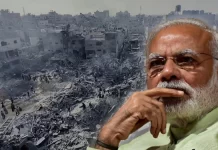
The war has also punctured the myth of Israeli‑American invincibility. Iran, backed by Russian technology and Chinese diplomacy, has not collapsed. It has retaliated horizontally — striking Gulf targets, disrupting shipping, forcing U.S. base evacuations. The decapitation strike that thrilled some Indian commentators has instead prolonged the conflict.
Israel’s global standing has narrowed; public opinion in the West has shifted; even in the United States, once‑unquestioned assumptions are being challenged. The Trump administration, having gambled on quick regime change, now faces oil shocks that threaten its own political fortunes.
India misread the moment. It assumed American power and Israeli intelligence were constants. Both have proved brittle. Technology can kill leaders; it cannot predict the nationalism their deaths unleash. The hubris that led Washington into Iraq now echoes across the Gulf.
For India, the lesson is sharper. A country where 800 million people live on less than $3.65 a day cannot afford elite adventurism. The “India of 100 million” — the aspirational urban class that dominates television studios and think‑tank panels — dreams of great‑power status through high‑tech alliances. The India of 1.4 billion needs affordable fuel, stable remittances, and food security. These two Indias have drifted too far apart. Foreign policy must serve the second.
What should New Delhi do now? Not a dramatic U‑turn — that would signal panic and squander leverage. But a deliberate recalibration is urgent.
First, energy realism. Increase Russian imports immediately — they already surged 50 percent in March as a hedge. Diversify further into Africa, Latin America, and U.S. cargoes. Expand strategic reserves beyond the current 74 days. Accelerate domestic exploration and renewables; the long‑abandoned target of reducing import dependence must be revived with seriousness.
Second, diplomatic repair. Reopen channels with Iran quietly; Chabahar remains essential for access to Central Asia. Reassure Gulf capitals with concrete economic initiatives; their stability protects Indian workers. At the United Nations and in BRICS, India should lead rather than follow — championing genuine multipolar de‑escalation instead of partisan resolutions. India still has the rare ability to speak to all sides; it should use it with humility, not theatrics.
Third, reclaim Global South leadership. The field is open. China is transactional, Russia distracted, Brazil and South Africa limited by scale. India’s size, democracy, and developmental experience give it both moral and material authority. It should champion reforms at the IMF and WTO that benefit the many, not the arms exporters. It should call for ceasefires without caveats. Credibility lost in Jerusalem can be rebuilt — but only through consistency.
Finally, domestic honesty. The aspirational narrative has its place, but it cannot masquerade as national interest. Grand strategy is not measured in photo‑ops or procurement lists. It is measured in whether diesel prices stay stable, whether remittances continue to flow, whether the poorest Indians can cook their meals without fear of the next shock.
The coming months will test whether India can correct course. The war may grind on, oil may stay high, remittances may falter. If New Delhi doubles down on the Israel–U.S. axis, it risks becoming collateral damage in someone else’s forever war. If it pivots with care — cutting losses without spectacle — it can emerge stronger: energy‑secure, diplomatically credible, and aligned with the needs of its 1.4 billion citizens.
Great powers are rarely forgiven for betting on the wrong lifeline. India does not need to abandon Israeli technology. It simply needs to remember that for most Indians, the real strategic asset is not a drone in the sky but fuel in the tank and stability in the Gulf. The choice was never drones versus oil. It was always elites versus the nation. It is time to choose the latter.